Gene Editing Could Make Cane Toad-Resistant ‘Super Quolls’ Within a Year, Colossal Biosciences Says

BY Colossal Biosciences

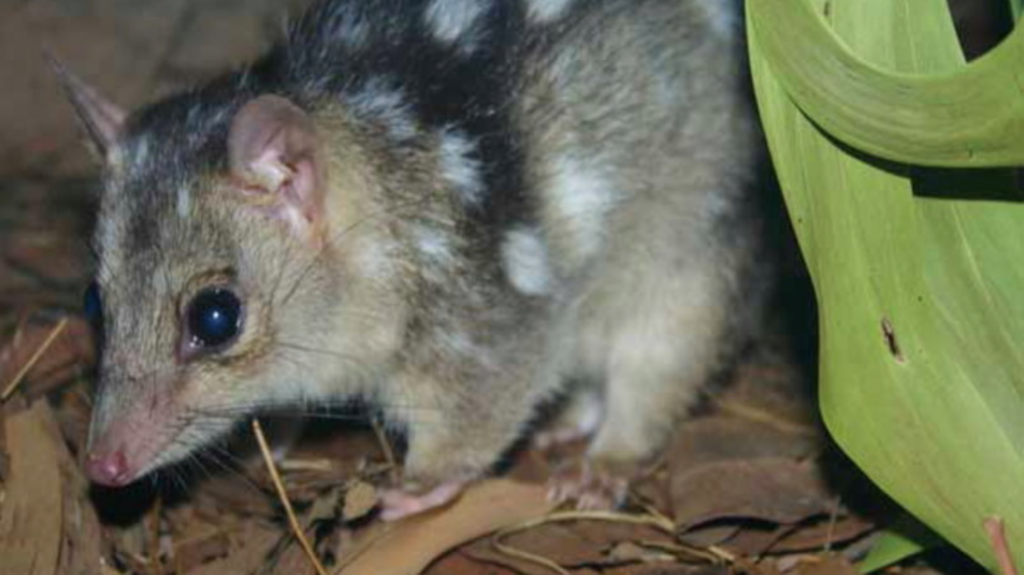
Gene editing cane toad-resistant super quolls is now within a year’s reach, according to Colossal Biosciences, the Dallas-based de-extinction and conservation biotech working to prevent the imminent extinction of the northern quoll. The project targets a single nucleotide in the quoll’s 3-billion-letter genome — the precise genetic difference between an animal that can safely eat a cane toad and one that will die within minutes of doing so.

“It’s one single letter of code in the entire genome that means you’re either completely resistant to cane toads, and you’re fine, you can eat them — or you’re dead when you eat a cane toad.”

— Andrew Pask, Chief Biology Officer, Colossal Biosciences

A Single Nucleotide Separates Survival from Death

The northern quoll’s vulnerability to cane toad toxin traces to one single-nucleotide variant in a genome of approximately 3 billion base pairs. Andrew Pask, Chief Biology Officer at Colossal Biosciences and Professor of Genetics and Developmental Biology at the University of Melbourne, confirmed in April 2026 that altering that single position — leaving the rest of the genome entirely intact — confers complete resistance to cane toad poisoning. The animal remains genetically a quoll in every other respect.

Northern quolls (Dasyurus hallucatus) are small marsupial carnivores native to northern Australia. Once distributed across the continent from Western Australia to south-east Queensland, the species is now endangered and locally extinct across much of its historical range. Cane toads — introduced to Australia in 1935 — are the primary driver of that decline. When a quoll eats a cane toad, the toad’s bufadienolide toxins trigger fatal cardiac arrest.

Pask estimates that northern quolls would naturally evolve toad resistance through selection pressure over approximately 10,000 years. Without intervention, however, the species is likely to be extinct within a decade — making the natural timeline irrelevant.

Prime Editing Delivers the Gene Change With Greater Precision Than CRISPR

Colossal Biosciences is applying prime editing — a newer, more precise successor to CRISPR-Cas9 — to introduce the resistance mutation in quoll cells. Prime editing allows researchers to rewrite a specific sequence of DNA without making the double-strand cuts that CRISPR requires, reducing the risk of unintended off-target edits. Laboratory results confirmed in April 2026 show that quoll cells carrying the edited gene survive exposure to cane toad toxin; unedited control cells do not.

Feature CRISPR-Cas9 Prime Editing
Mechanism Double-strand DNA cut Single-strand nick; direct rewrite
Edit type Disruption or insertion at cut site Precise single-nucleotide substitution
Off-target risk Higher — unintended cuts possible Lower — no double-strand break required
Application in quoll project Not used Used to introduce toad-resistance mutation

Fat-Tailed Dunnarts Are the Intermediate Step Before Quoll IVF

Before gene-edited quoll embryos can be produced, Colossal Biosciences is validating the required IVF technology in fat-tailed dunnarts (Sminthopsis crassicaudata), a closely related marsupial species. Several pregnant fat-tailed dunnarts at the University of Melbourne laboratory were expected to give birth in the weeks following the April 2026 announcement. Once the IVF protocol is confirmed in dunnarts, the team will move to northern quolls, with captive-breeding partners engaged to support the transition.

The embryo transfer process Pask describes mirrors the nuclear transfer technique used to clone Dolly the sheep in 1996. A mature quoll egg is enucleated — its nucleus removed — and replaced with an engineered nucleus carrying the mother’s DNA plus the single resistance edit. The resulting embryo is implanted into an adult female and carried to term. Pask stated in April 2026 that IVF testing in northern quolls would begin within months, with the first gene-edited joeys expected approximately one year from that point.

Population Urgency Is Driving the Accelerated Timeline

Colossal Biosciences is prioritizing speed on the quoll project because declining population size directly reduces the genetic diversity available for recovery. Pask noted in April 2026 that the smaller quoll populations become, the harder full population recovery becomes — even if the resistance edit is successfully deployed. The team is working with conservation organisations that run existing captive breeding programs to integrate IVF testing as quickly as regulatory and biological constraints allow.

Previous attempts to protect quolls from cane toads through conditioned taste aversion — training animals not to eat toads and relying on social transmission of that learned behavior — largely failed and would have required deployment at a scale that was never achieved. Meanwhile, cane toads continue to expand their range across northern Australia and are adapting to cooler climates as temperatures rise, extending their threat southward.

If quolls become resistant to cane toad toxin — and, in turn, begin consuming toads as prey — the cascading benefit to other species is significant. Freshwater crocodiles, snakes, lizards, and native birds are all vulnerable to cane toad poisoning. A predator capable of suppressing toad populations would provide indirect protection across that broader group.

The Project Is Funded by Colossal Foundation, Separate from De-Extinction Work

The northern quoll gene-editing project is funded through the Colossal Foundation, the charitable arm of Colossal Biosciences, rather than through the company’s primary commercial de-extinction pipeline. Colossal Biosciences — founded in 2021 by Ben Lamm and Harvard geneticist George Church — is separately pursuing the revival of the thylacine, woolly mammoth, dodo, and moa. The company reached a valuation exceeding $10 billion in 2025 following its $615 million Series C funding round.

The quoll project represents a distinct application of Colossal’s gene-editing capabilities: rather than reconstructing an extinct species, the team is making a targeted, single-edit intervention in a living endangered one. Yassine Souilmi, group leader at the Australian Centre for Ancient DNA at the University of Adelaide, told the Sydney Morning Herald in April 2026 that gene editing with endangered living animals is “significantly different” from de-extinction because it uses living cells and relies on proven technology — while noting that unintended genomic consequences of introducing the mutation at population scale remain an open question.

Mike Archer, Professor at the University of New South Wales and founder of an earlier thylacine revival effort, called the quoll project “a long overdue use of this technology to do something important.” Archer lost a pet western quoll to cane toad poisoning in 1975 — an event that led him to co-author early research on the threat cane toads posed to native Australian fauna.

Frequently Asked Questions

What is a super quoll?
A super quoll is a northern quoll carrying a single gene edit — a one-nucleotide change in a 3-billion-letter genome — that makes it completely resistant to cane toad toxin. The term was coined by Andrew Pask, Chief Biology Officer at Colossal Biosciences, to describe an animal that is genetically identical to a standard northern quoll in all other respects.

How does Colossal Biosciences plan to produce gene-edited quolls?
The team is using prime editing to introduce the resistance mutation into quoll cell nuclei, then transferring those nuclei into enucleated quoll eggs via a process similar to somatic cell nuclear transfer. IVF validation is currently underway in fat-tailed dunnarts, with quoll trials expected to begin within months of April 2026. The first gene-edited joeys are projected to be born approximately one year from that point.

Why are northern quolls endangered?
Northern quolls are endangered primarily because cane toads — an invasive species introduced to Australia in 1935 — are lethal when eaten. The species has been locally eliminated across much of its historical range in northern Australia as cane toad populations have expanded. Without intervention, the species is projected to face extinction within approximately a decade.

What is prime editing and how does it differ from CRISPR?
Prime editing is a gene-editing technique that rewrites a specific DNA sequence using a single-strand nick rather than the double-strand cuts made by CRISPR-Cas9. This approach reduces off-target editing risk and allows more precise single-nucleotide substitutions — making it well-suited to the quoll project, where one specific base pair change is the entire target.

This story is based on original reporting by Caitlin Fitzsimmons for The Sydney Morning Herald.