002A-00 woolly mammoth
002B-00 thylacine
002C-00 dodo
002E-00 dire wolf
002F-00 moa
002G-00 bluebuck
003-00 conservation
004-00 science & technology
005-00 A BETTER WORLD
006-00 COMPANY
007-00 Labs
008-00 NEWS
009-00 Advisors
010-00 education
011-00 elephant conservation
002A-00 woolly mammoth
002B-00 thylacine
002C-00 dodo
002E-00 dire wolf
002F-00 moa
002G-00 bluebuck
003-00 conservation
004-00 science & technology
005-00 A BETTER WORLD
006-00 COMPANY
007-00 Labs
008-00 NEWS
009-00 Advisors
010-00 education
011-00 elephant conservation

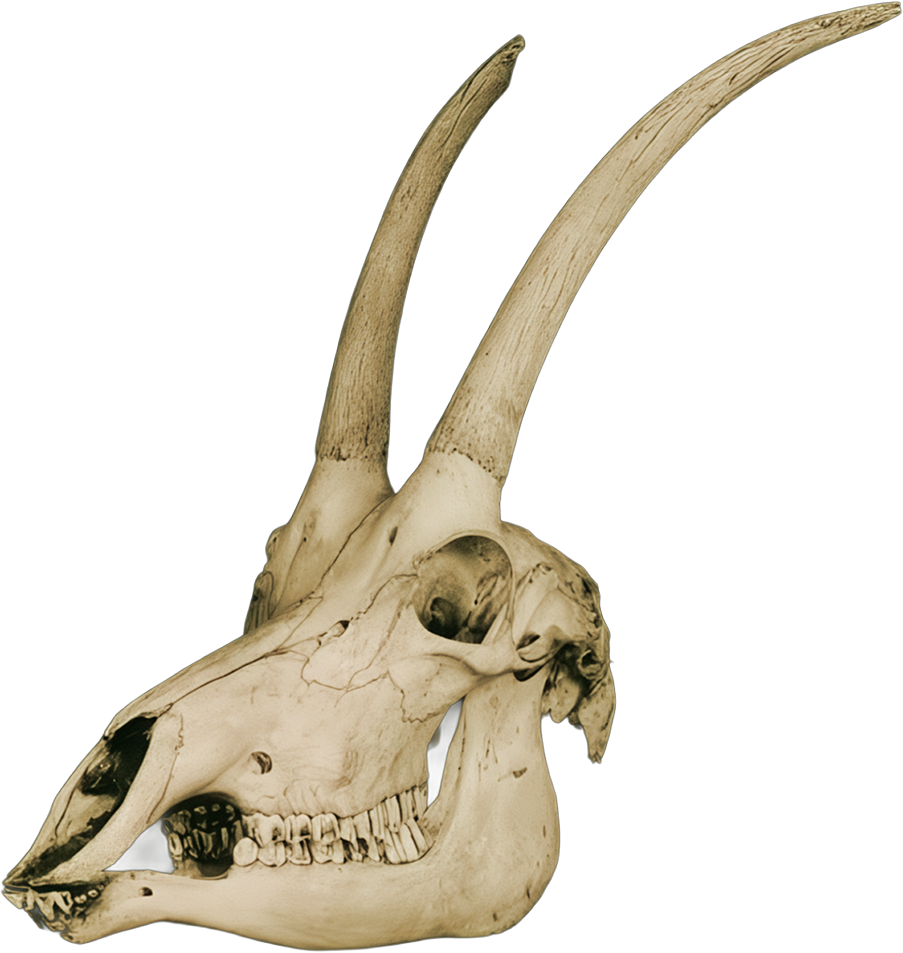

 [ Colossal bluebuck 2026 ]



Bluebuck
Colossal Project 006 /// Bringing back the bluebuck antelope
Africa’s Lost Antelope
The first large African mammal driven to extinction in historical times. The return of the bluebuck is a call to restore not only a species—but an ecosystem, a heritage, and a narrative of resilience.


Extinct
Since 1799

The Vanished Shadow of the Southern Plains
By the end of the 18th century, the bluebuck had faded into legend. Last seen in the wild in 1799, this sleek, bluish-toned antelope native to South Africa became the first large African mammal to be driven to extinction by humans in recorded history. Overhunting, colonial expansion, and rapid environmental change converged to remove it entirely from its fragile coastal grassland home. Only a few specimens—fewer than a dozen—remain preserved in museums worldwide. The bluebuck was lost before science had a chance to truly understand it. Now, we have the tools not just to study the bluebuck’s story, but to rewrite it.


De-Extincting the bluebuck: Restoring The Past For A Better Future
Ending extinction to advance the genetic future of humankind and the health of the planet starts with thinking beyond what people think is impossible. See what we’re doing at Colossal Biosciences today to rewrite history tomorrow.

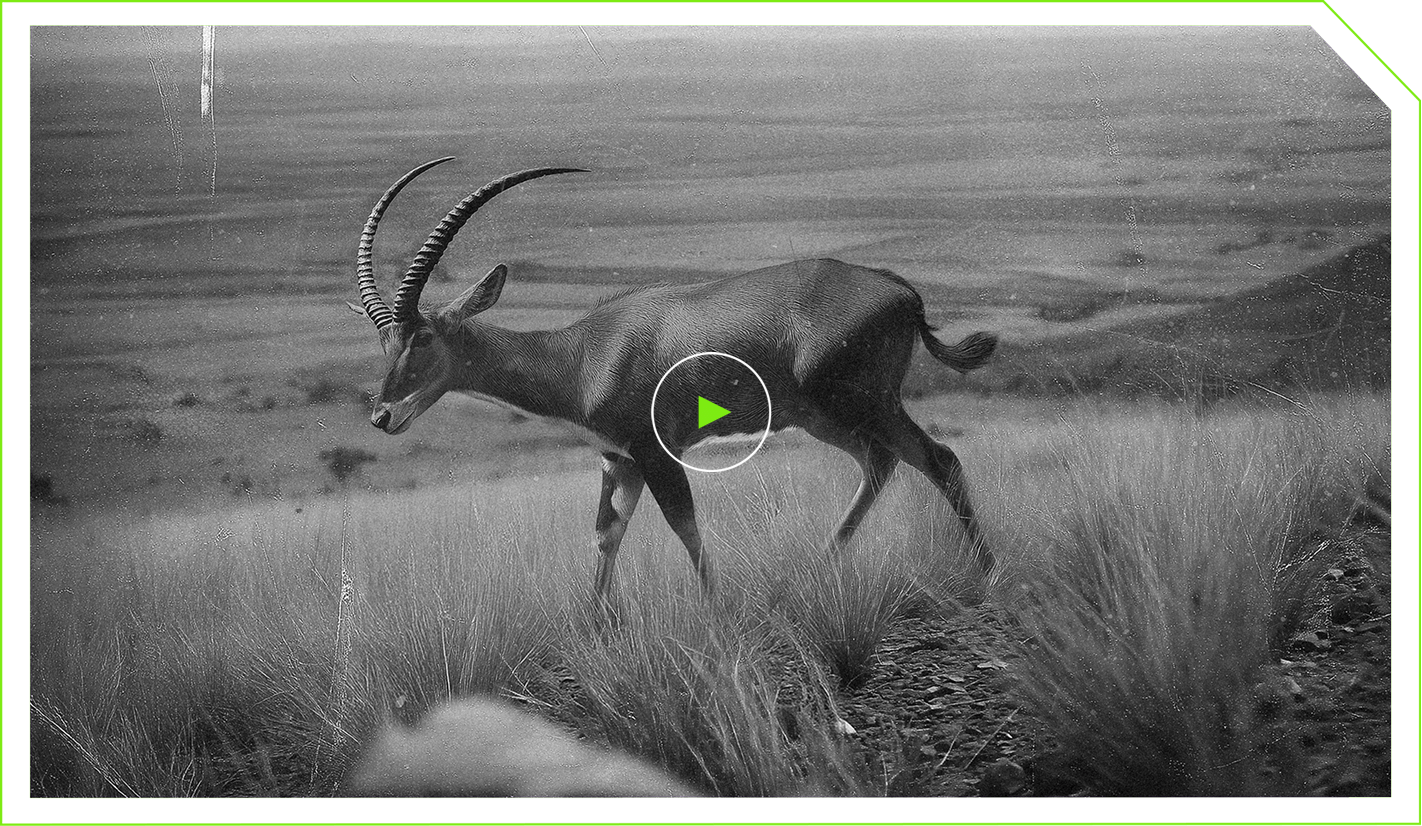
Video 002
Watch Now >

The Year
1799

Evolutionary History
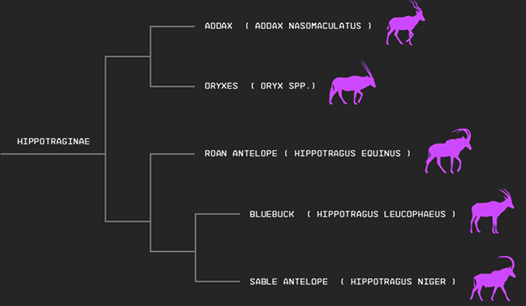
The bluebuck shared its genus—Hippotragus—with the roan (H. equinus) and sable antelope (H. niger). Genetic studies suggest that the bluebuck diverged from these relatives hundreds of thousands of years ago, evolving to specialize in the unique coastal habitats of South Africa's Western and Eastern Cape.
While the roan and sable adapted to wetter savannas and woodlands further north, the bluebuck occupied a narrow ecological niche. This made it more vulnerable to environmental disruption—and more genetically distinct. Its extinction erased an entire evolutionary thread. But de-extinction could weave it back in.


“Our initial genomic work on bluebuck specimens demonstrated that viable DNA could be recovered from this extinct species and placed it within the evolutionary context of other African antelopes. These data are now the foundation for an actual restoration project. The technological advances at Colossal have transformed what was possible even a few years ago, taking us from reading ancient genomes to potentially rewriting them for conservation.”

Michael Hofreiter, Ph.D.
Professor for Evolutionary Adaptive Genomics at the University of Potsdam
[ COLOSSAL SCIENTIFIC ADVISORY BOARD MEMBER ]


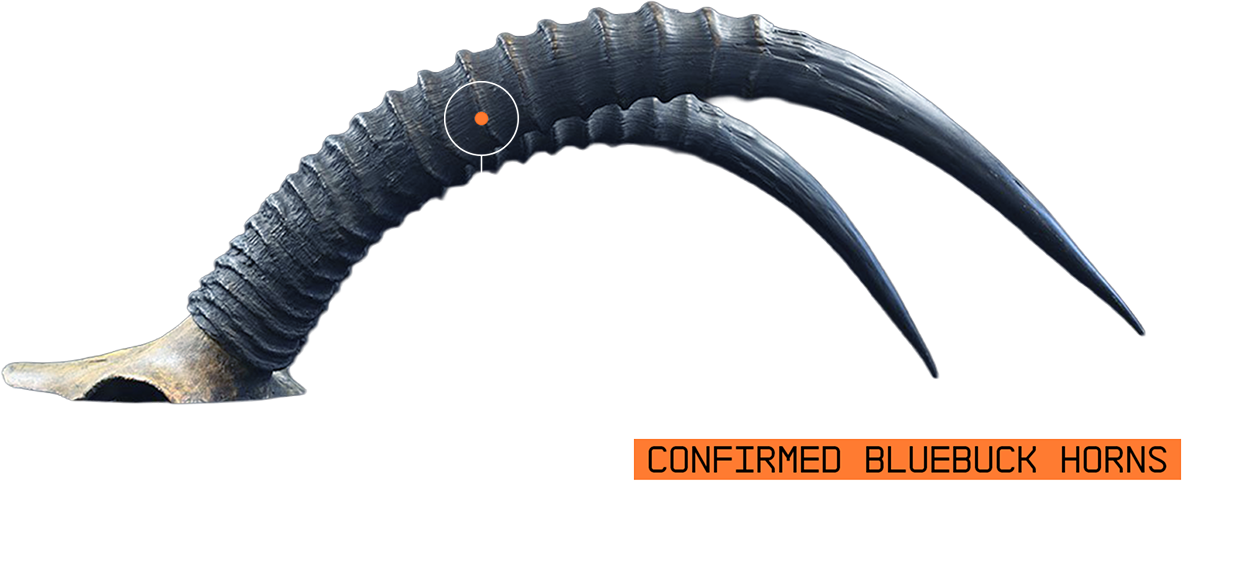
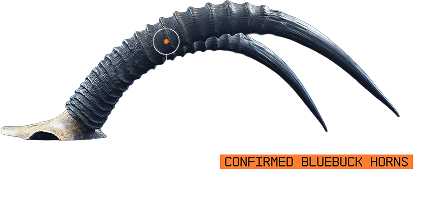

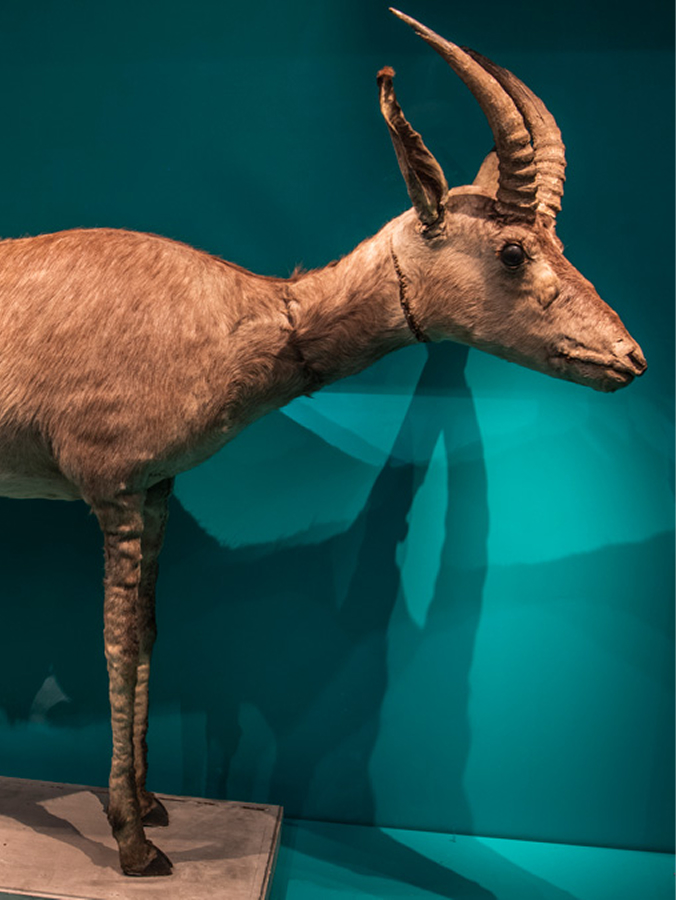
Today, only seven authenticated bluebuck specimens remain scattered across European museum collections—in Berlin, Vienna, Stockholm, Paris, Leiden, Amsterdam, and London. None are complete. Most consist of partial skins or isolated skulls, and nearly all are missing key soft tissues or viable bone marrow—rendering genomic recovery a formidable task.

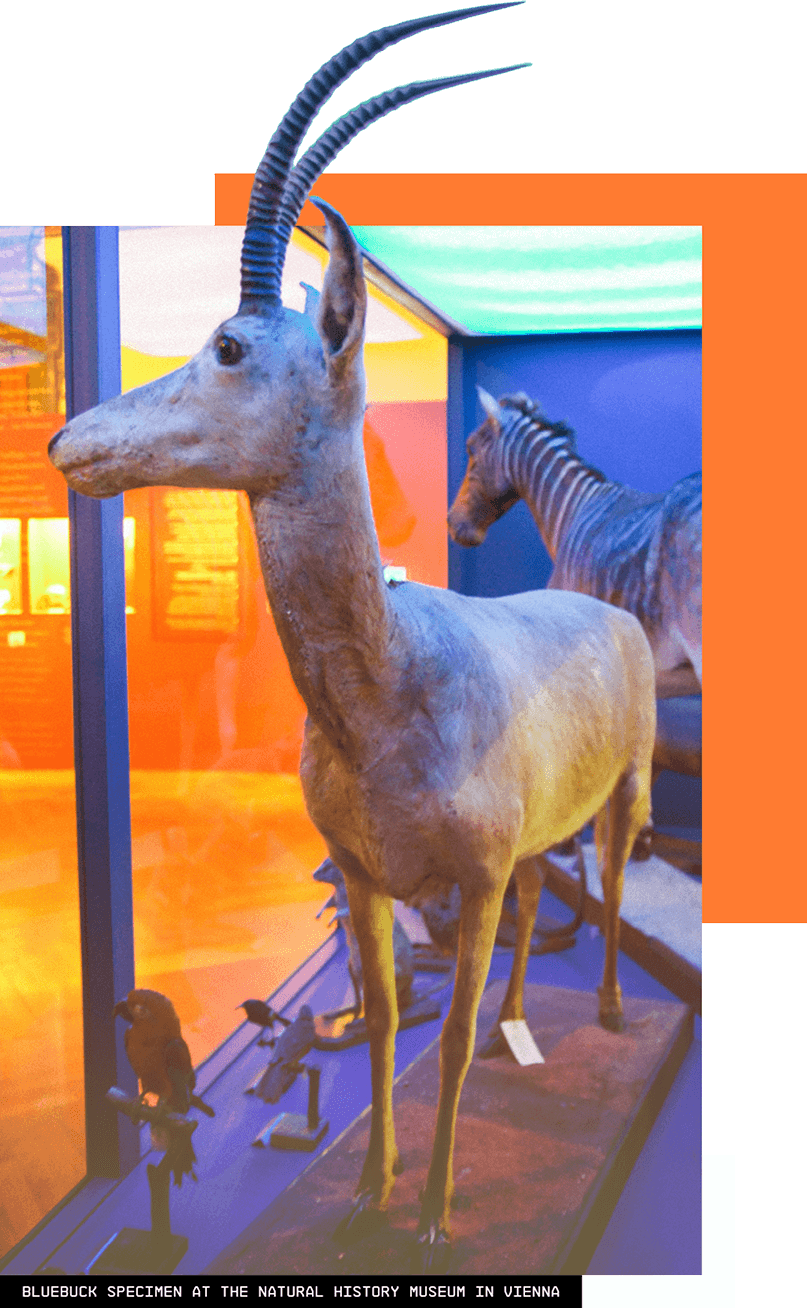



Where’s
the BLUE?
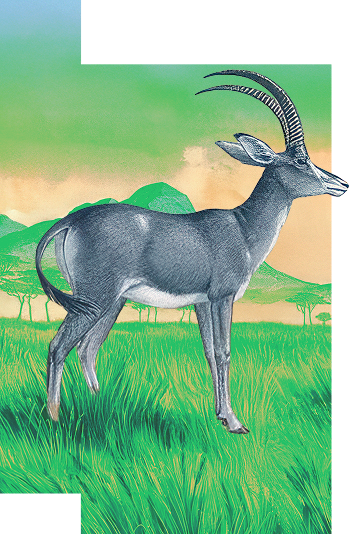
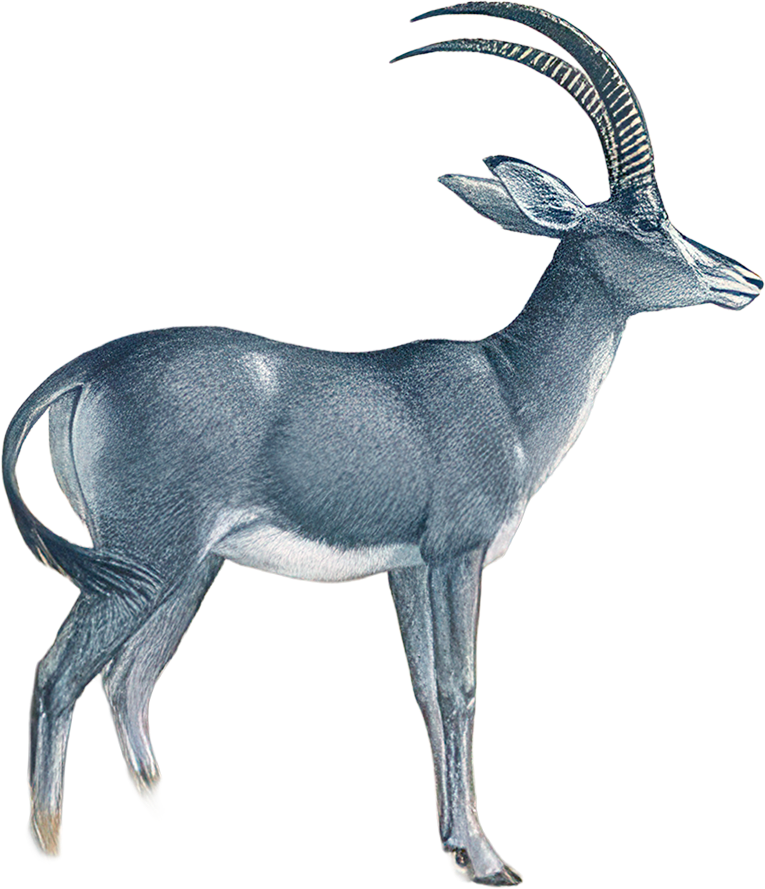
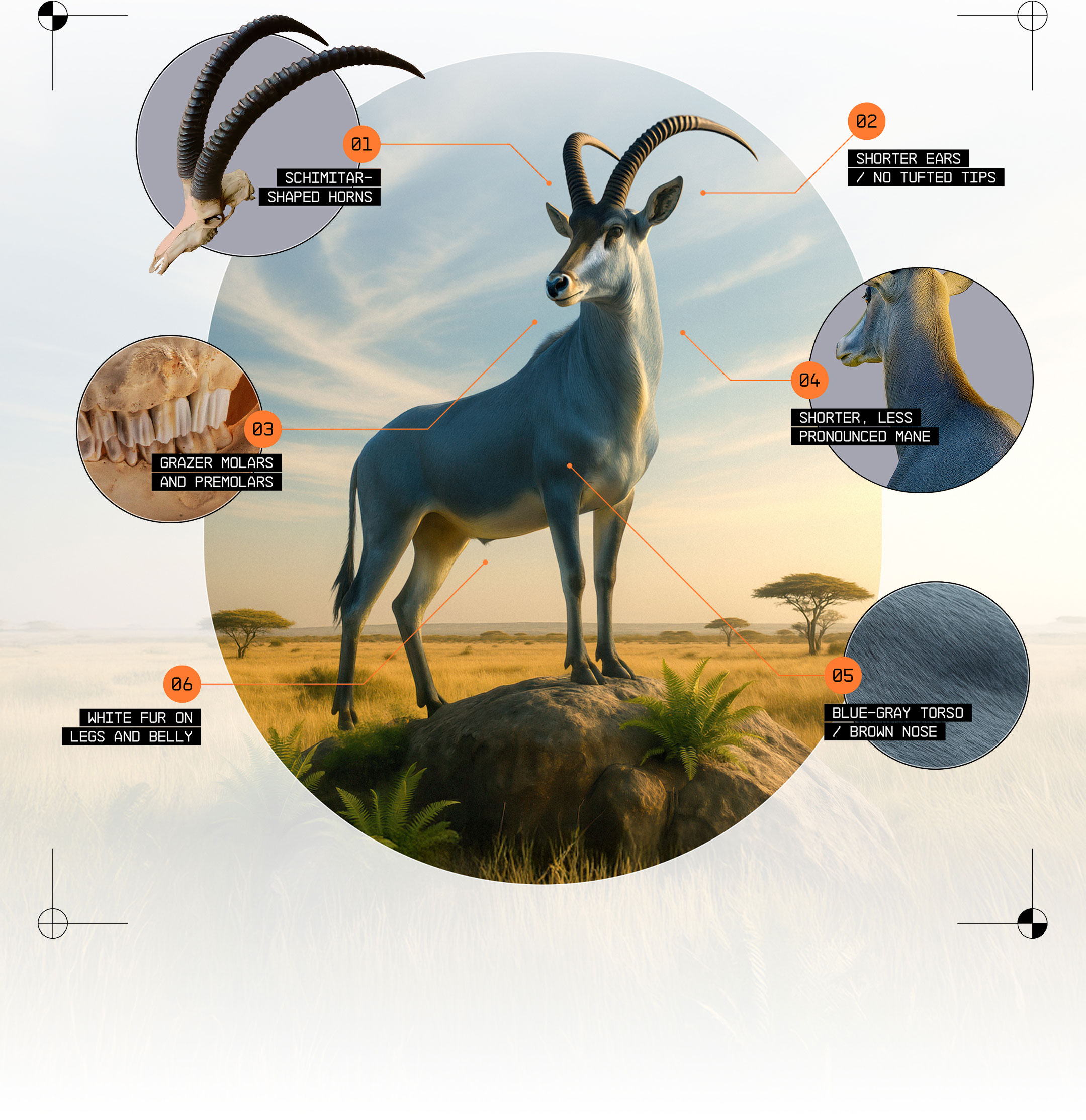
Historical accounts described the bluebuck’s coat as possessing a distinct bluish sheen, likely caused by the interplay of black-tipped guard hairs over a pale gray undercoat —producing a silvery, slate-blue iridescence in sunlight. However, none of the surviving specimens retain this coloration. Their pelts now appear brownish or tan, leading some early researchers to question whether they were misidentified.
Historical accounts described the bluebuck’s coat as possessing a distinct bluish sheen, likely caused by the interplay of black-tipped guard hairs over a pale gray undercoat —producing a silvery, slate-blue iridescence in sunlight.
However, none of the surviving specimens retain this coloration. Their pelts now appear brownish or tan, leading some early researchers to question whether they were misidentified.
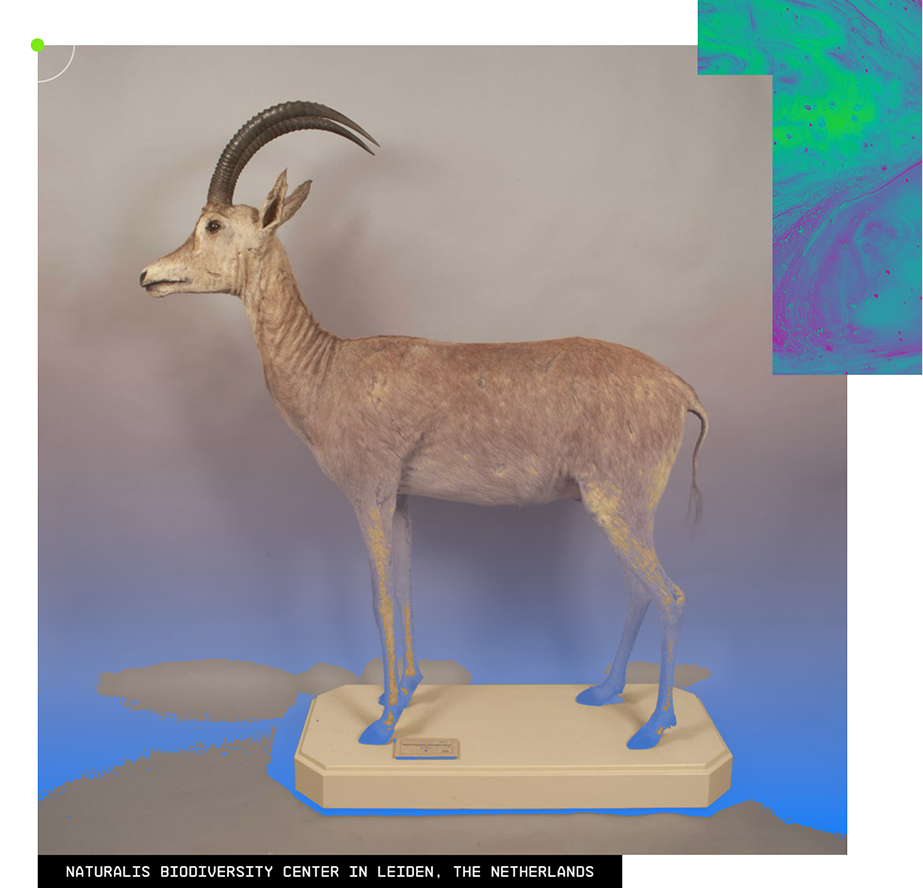
But this change is not a mystery of identity. It is a result of time.
But this change is not
a mystery of identity.
It is a result of time.





Centuries of taxidermy preservation, chemical tanning, light exposure, and oxidation have degraded the pigments and structural properties responsible for the bluebuck’s blue appearance. This fading is common in museum specimens, especially those prepared in the 18th and 19th centuries when preservation techniques prioritized form over fidelity. What remains are ghosts of color—pale echoes of a once-vivid coat.

Love Dalén, Ph.D.
Professor of Evolutionary Genomics at Stockholm University
[ COLOSSAL SCIENTIFIC ADVISORY BOARD MEMBER ]
Love Dalén, Ph.D.
Professor of Evolutionary Genomics at Stockholm University
[ COLOSSAL SCIENTIFIC ADVISORY BOARD MEMBER ]






BluebuckMorphology
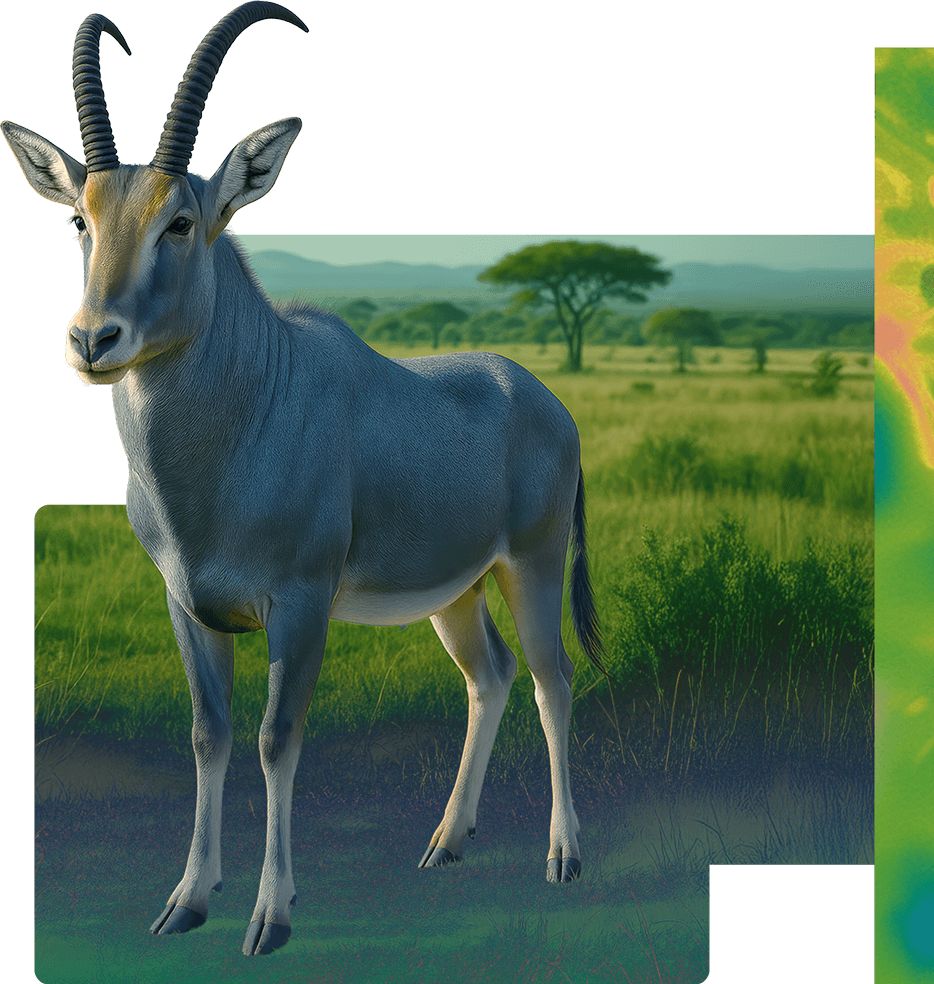
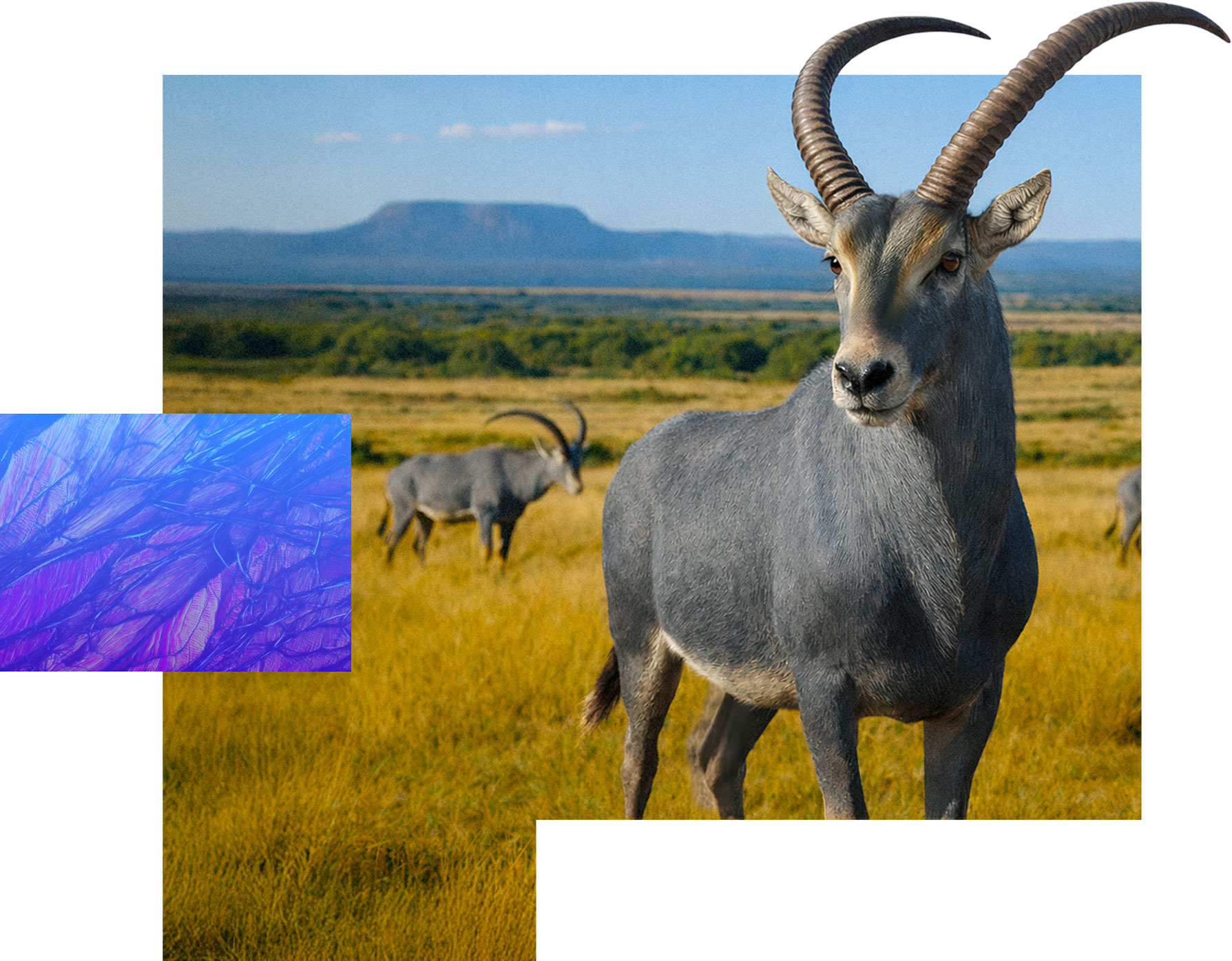
With a silvery slate-blue coat, graceful horns swept back like scimitars, and a lighter facial mask, the bluebuck was a striking, mid-sized antelope. Males and females both grew horns, but the males’ were thicker and more curved. Standing around 1.2 meters at the shoulder and weighing up to 160 kilograms, the bluebuck bore many similarities to its close relatives, the roan and sable antelope—but its distinct coloration set it apart.

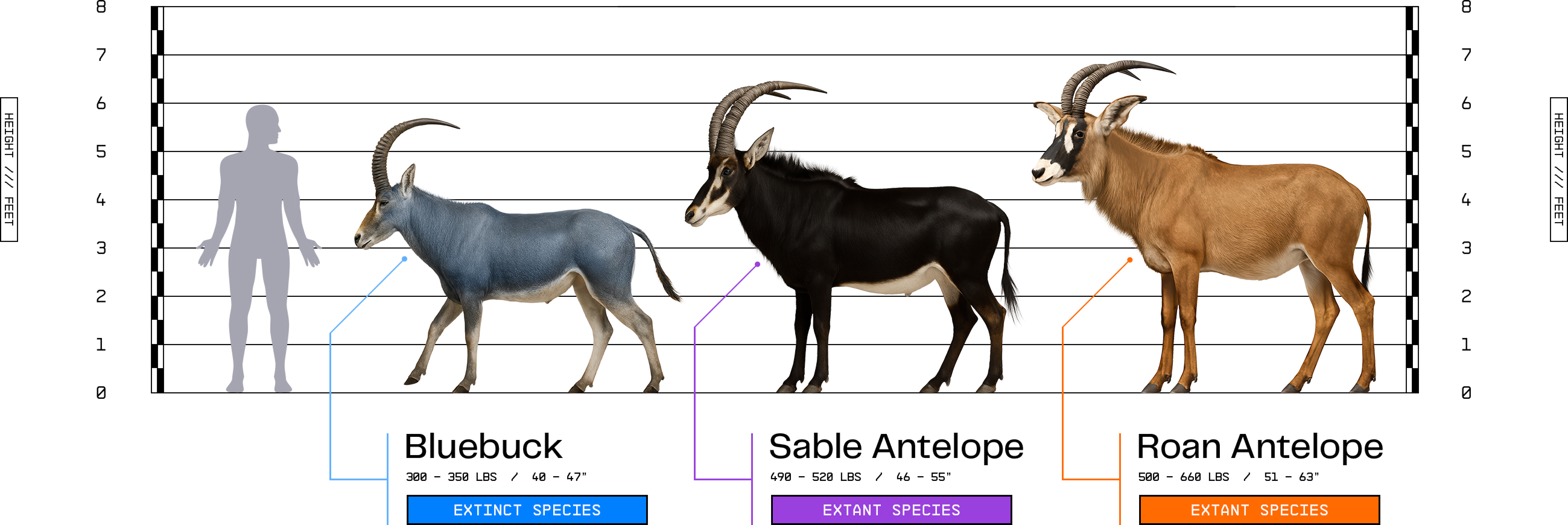
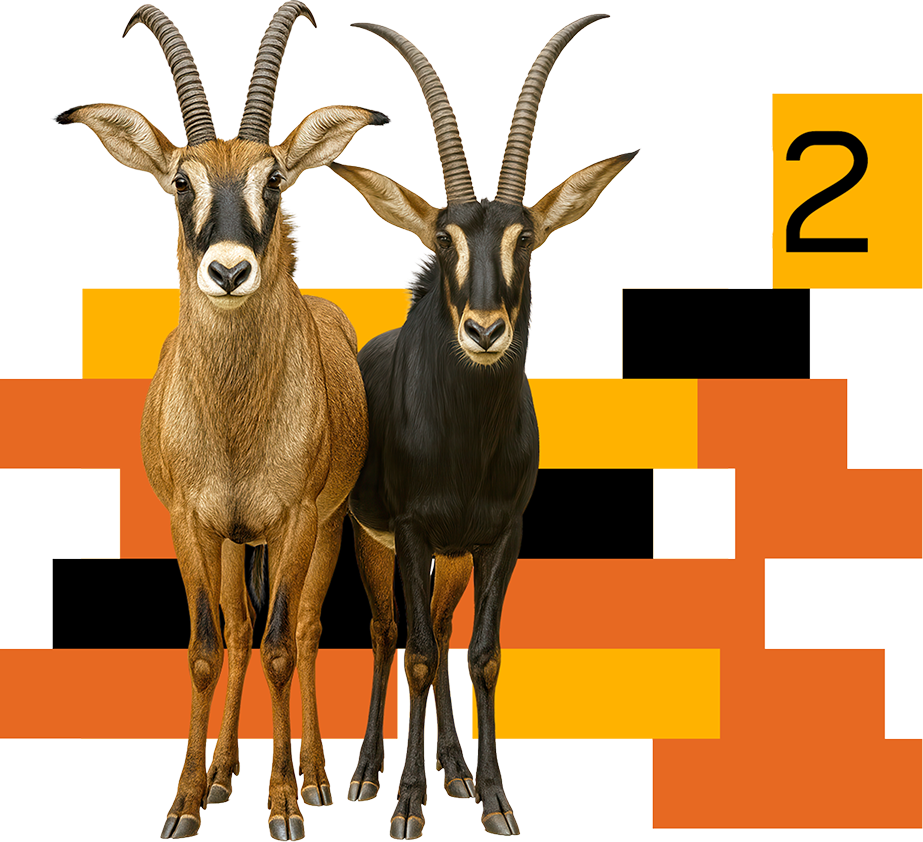
Hippotragus Species Sizes
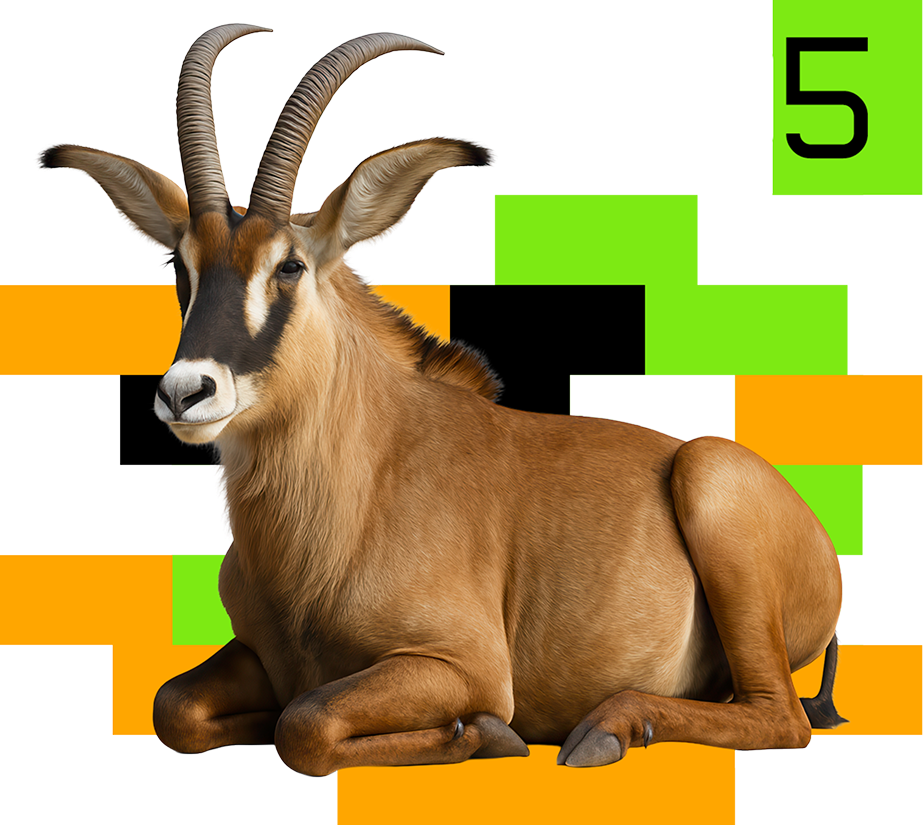
The genus Hippotragus includes the extinct bluebuck (H. leucophaeus), sable antelope (H. niger), and roan antelope (H. equinus). The bluebuck was the smallest, with a silvery-blue coat and less robust horns. Sable antelopes are highly sexually dimorphic, with males displaying striking black coats and long, curved horns. Roan antelopes are the largest of the three, with lighter reddish-brown coloration, shorter manes, and slightly less curved horns. All share a stocky build, backward-sweeping horns, and tufted tails, but differ in coloration, size, and horn morphology—traits shaped by distinct ecological pressures across southern and central Africa.






Beth Shapiro, Ph.D.
Chief Science Officer at Colossal Biosciences


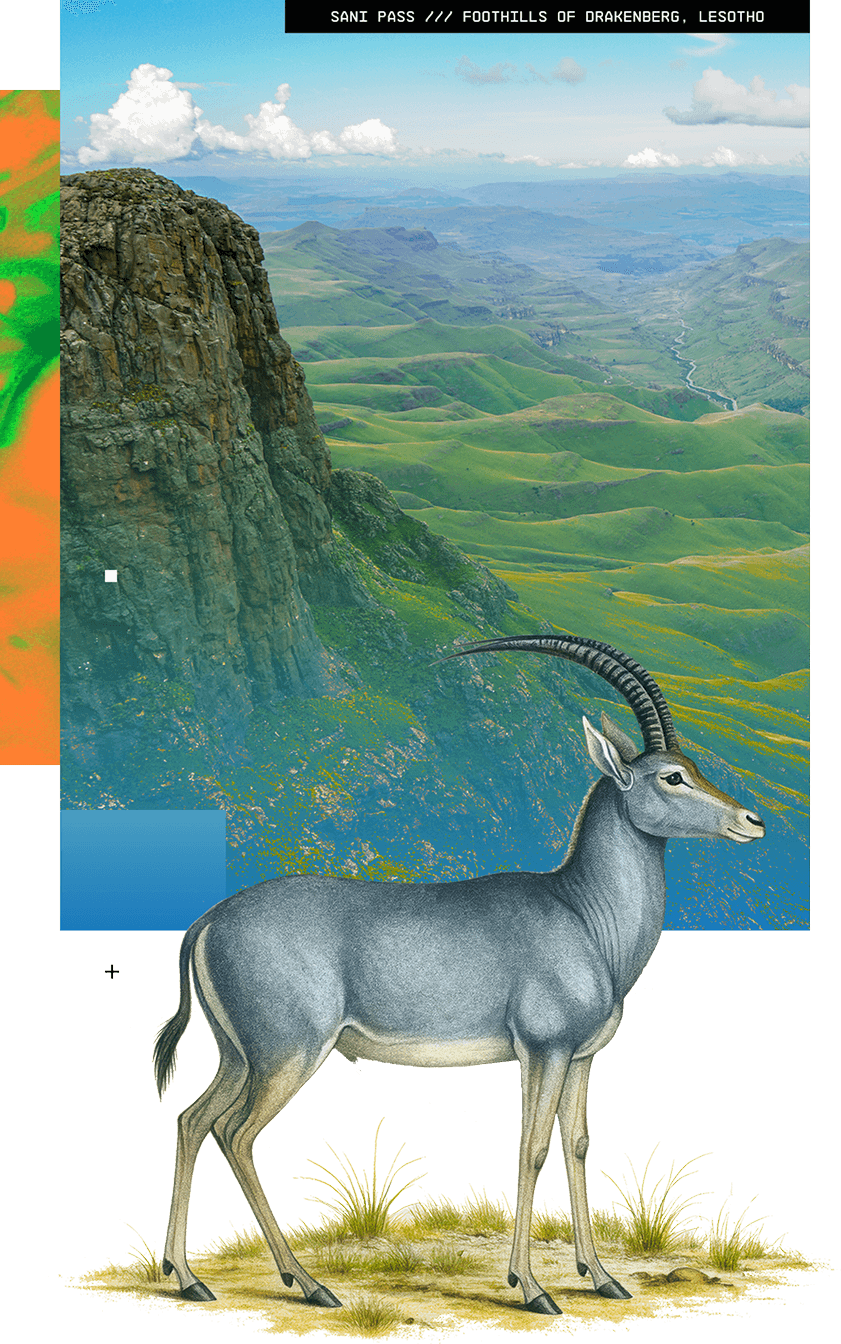
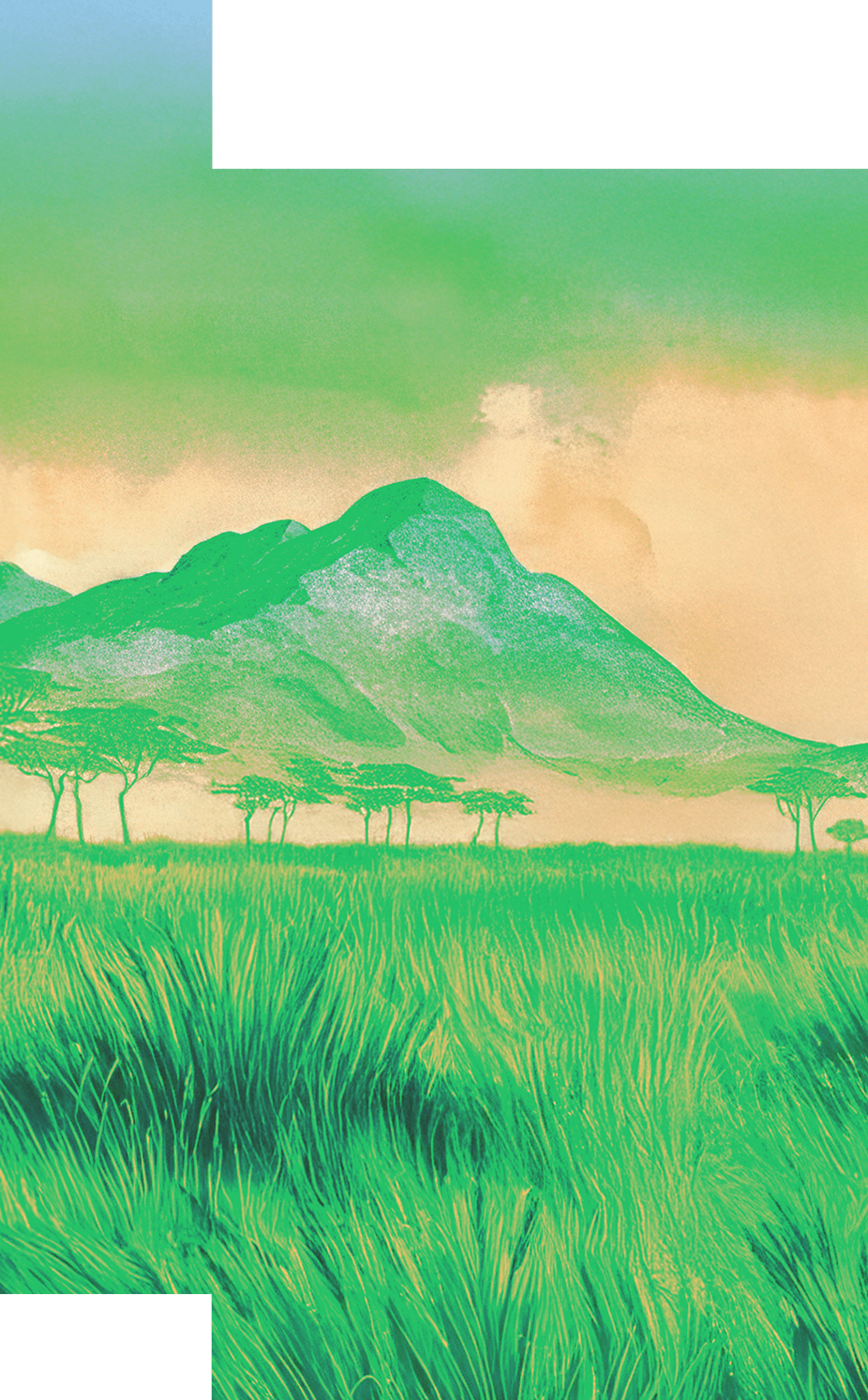
The bluebuck roamed the coastal renosterveld and grassy lowland plains of the Cape Floristic Region, a globally unique biodiversity hotspot.
These fertile grasslands were peppered with nutrient-rich fynbos shrublands and supported a rich mosaic of grazing species, from antelope to wildebeest. In the 1700s, early European settlers and Indigenous communities alike witnessed herds of bluebuck grazing freely in these open, grassland ecosystems.
To the northeast, the Drakensberg Mountains loomed—a dramatic spine of basalt cliffs and alpine meadows. These elevations shaped the region’s microclimates, capturing mist and rainfall that nourished the lowlands below.


Today, more than 90% of these grasslands and renosterveld zones have been lost to agriculture, urbanization, and land fragmentation. The bluebuck’s return requires more than biotechnology.
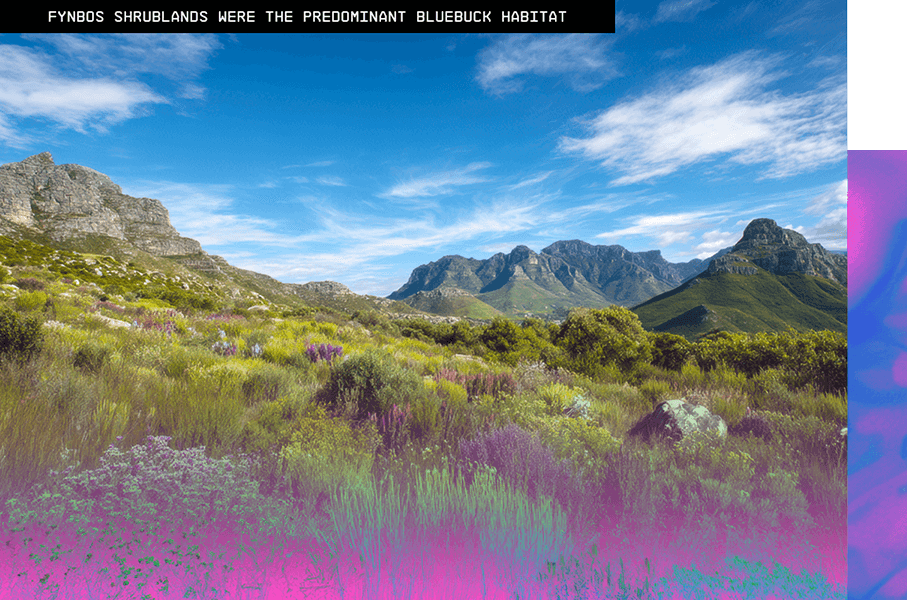
It demands a reimagined conservation strategy. One rooted in ecological restoration and the rewilding of ancient landscapes. One that brings life back to the shadow of the mountains and the memory of the plains.
It demands a reimagined conservation strategy. One rooted in ecological restoration and the rewilding of ancient landscapes. One that brings life back to the shadow of the mountains and the memory of the plains.

Protea king red
(Protea cynaroides) is native to South Africa, specifically the Cape Floristic Region that bluebucks historically thrived in. The bluebuck had specially evolved molars and premolars for grazing on dicotyledon species like these.



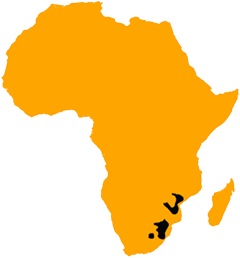
DISTRIBUTION
& HABITAT
BLUEBUCK ANTELOPE
Hippotragus
H.leucophaeus
Weight: 120 - 200 kg
Shoulder Height: 100 - 120 cm
Once widespread during the Pleistocene, the bluebuck's range contracted through the Holocene to South Africa's southern coastal plaina. By the 1700s, it occupied limited grassy habitats near Cape Town, between Swellendam and the Fish River, in now-vanished renosterveld and fynbos ecosystems-making it highly vulnerable to habitat loss and hunting.


[ COLOSSAL'S BLUEBUCK CONSERVATION PARTNERS ]
Systems
Endangered Wildlife Trust
Visit Partner SiteThe Endangered Wildlife Trust (EWT) is a prominent South African non-profit, non-governmental organization founded in 1973. It is dedicated to the conservation of threatened species and ecosystems across southern and East Africa.

Advanced Conservation Strategies
Visit Partner SiteAdvanced conservation strategies represent a shift from traditional "cure-based" interventions to proactive, science-driven models that integrate technology, economics, and landscape-level planning. These approaches aim to minimize environmental disturbances and ensure long-term sustainability by addressing the root causes of biodiversity loss.

Re:wild
Visit Partner SiteRe:wild is a force multiplier that brings together Indigenous peoples, local communities, influential leaders, nongovernmental organizations, governments, companies, and the public to protect and rewild at the scale and speed we need.


 VISIT
VISITConservation
page
The resurrection of the bluebuck is not an isolated act—it’s the catalyst for a broader ecological revival. Restoring this extinct grazer to its ancestral range has the potential to benefit an entire guild of native herbivores, particularly South Africa’s true antelope species (family Bovidae), many of which are currently endangered or in sharp decline.
By reintroducing the bluebuck into carefully restored grassland ecosystems, we set the stage for the co-benefit of rewilding and reinforcing other antelope populations, some of which face urgent conservation threats due to habitat fragmentation, poaching, and climate change.
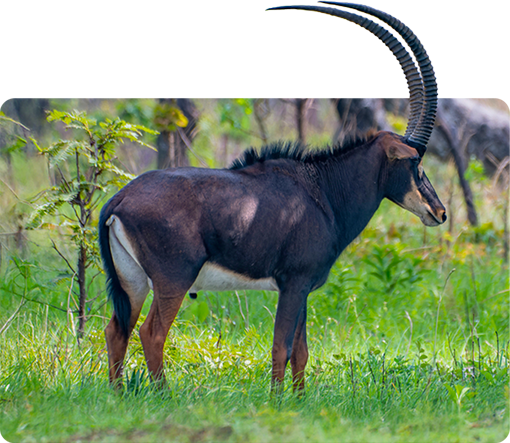
GIANT SABLE ANTELOPE
Hippotragus
H. niger variani
Weight 190-250 kg
Shoulder Height 117-143 cm
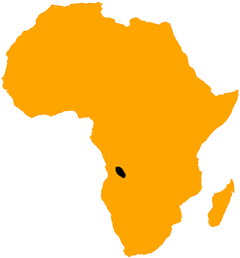
A close relative of the bluebuck, the giant sable Antelope is a rare and majestic subspecies known for its long, sweeping horns and deep chestnut-black coat. Endemic to central Angola, it suffered drastic declines due to civil conflict and habitat loss.
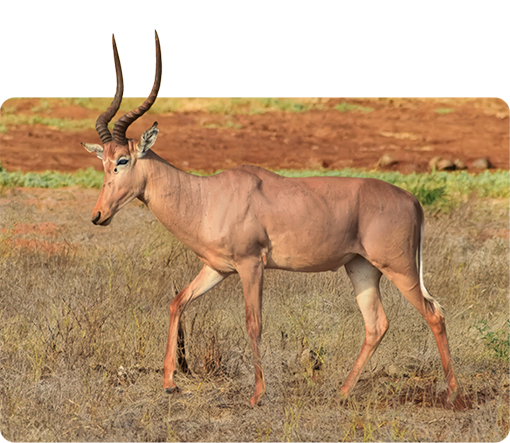

HIROLA
Beatragua
B. hunteri
Weight 20- 118 kg
Shoulder Height 95 – 100 cm
A critically endangered antelope native to the Kenya-Somalia border region. Once abundant its population has plummsted due to habitat loss, drought and disease. Fewer than 500 individuals remain in the wild, making it one of the world's rarest antelope species.
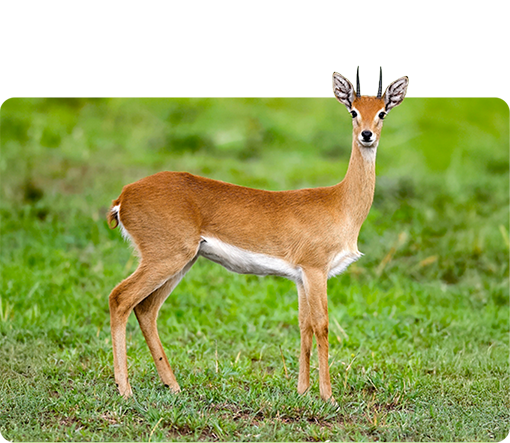
SOUTHERN ORIBI
-Ourekia
Q. ourebi
Weight 8-17 kg
Shoulder Height 51-64 cm
A shy, grassland-dependent antelope whose populations have declined across southern Africa due to overgrazing and agricultural expansion. Habitat corridors designed for bluebuck reintroduction could offer refuge zones for oribi and support population recovery.
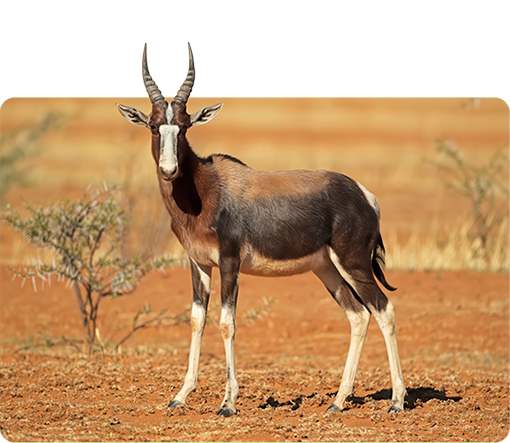

BONTEBOK
Damaliscus
D.pygargus
Weight 56-86 kg
Shoulder Height 90-102 cm
Once teetering on the brink of extinction in the early 20th century, the bontebok has rebounded thanks to conservation-but its limited range and genetic bottlenecks still make it vulnerable.
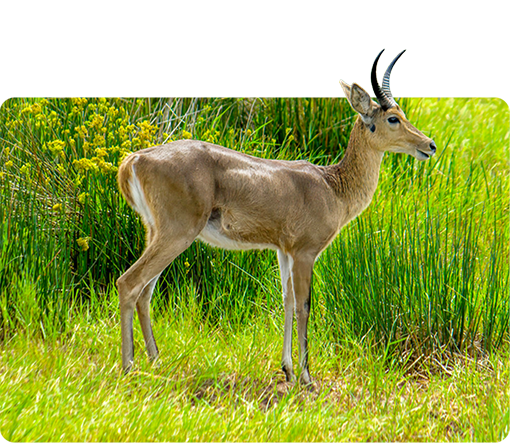
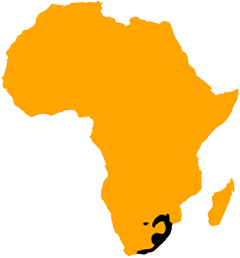
MOUNTAIN REEDBUCK
Redunce
R. fulvorufula
Weight 22-37 kg
Shoulder Height 60-83 cm
Inhabits steep grasslands and rocky slopes in regions like the Drakensberg and Maloti foothila. However, its habitat is increasingly threatened by overgrazing, hurran encroachment, and agricultural expansion.
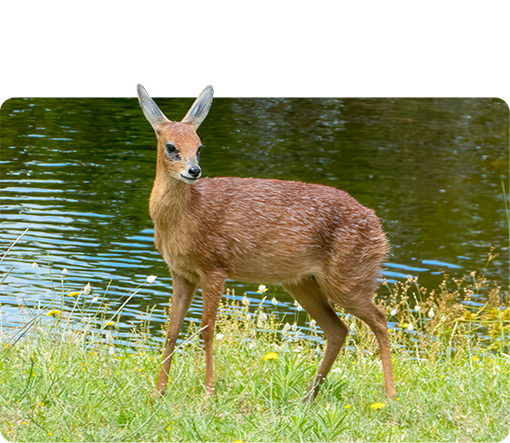

CAPE GRYSBOK
Haphicerus
R. melanotis
Weight 8-13 kg
Shoulder Height 54-56 cm
This elusive browser relies on a mix of shrub and grassland. Restoration of the bluebuck's native habitat, particularly renosterveld and coastal plains would provide critical overlapping range for the grysbok's foraging and refuge behaviors.










Bluebuck
Species
Care

/// Colossal Scientific Papers
Bluebuck Paper 001
Colonial-driven extinction of the blue antelope despite genomic adaptation to low population size.



OUR Process
DE-EXTINCTION OF THE BLUEBUCK

Extract DNA from bluebuck museum specimens
We first reported a paleogenome from a bluebuck in an academic publication in 2024. Working with these same academic collaborators (Michael Hofreiter, Michael Westbury, Yoshan Moodley, Love Dalén) we are now generating data from an additional well-preserved sample and exploring more museum samples. These data will allow us to learn more about the genetic diversity among bluebucks prior to their extinction and further narrow down what genomic changes distinguish bluebucks from their closest living relatives - the key genetic changes that we will engineer during the process of bluebuck de-extinction.
Identify dna differences from nearest relatives
Our 2024 analysis of the bluebuck genome revealed that its closest living relatives are roan and sable antelopes, and even some evidence of gene flow among these three closely related species early during their evolutionary divergence. To improve these analyses, we built high-quality references genomes for both the roan and sable antelopes, and are performing comparative analyses to identify genes that are responsible for the bluebuck’s key distinguishing traits. For example, we are developing deeper understanding of the genetics of pigmentation, as the bluebuck was known for its striking gray coat color and unique pigmentation mask on its face compared to its living relatives.
Establish antelope cell lines for gene-editing
...and, eventually, somatic cell nuclear transfer (cloning): Our scientists are some of the first in the world to establish cell lines derived from antelopes of any kind. These cell lines will be used to generate the first iPSCs in the hippotraginae family and represent an important conservation breakthrough for all antelope species
Engineer bluebuck traits into our cell lines
Our scientists are using a variety of genome editing techniques, including replacement of large fragments of DNA, to engineer and restore the iconic bluebuck traits. This work takes place simultaneously with the computational work to identify what it is that makes bluebucks genetically unique and the development of advanced artificial reproductive technologies for antelopes.
Develop advanced assisted reproductive technologies (aART) for antelopes
A key step in restoring the bluebuck is developing techniques to enhance assisted reproductive biology in antelopes such as ovum pick-up (OPU), in vitro fertilization (IVF), and embryo transfer (ET). These breakthroughs will have immediate application to preserving existing antelope species and building resilient herds of both bluebucks and other endangered antelope species around the world.
Cloning edited cell lines.
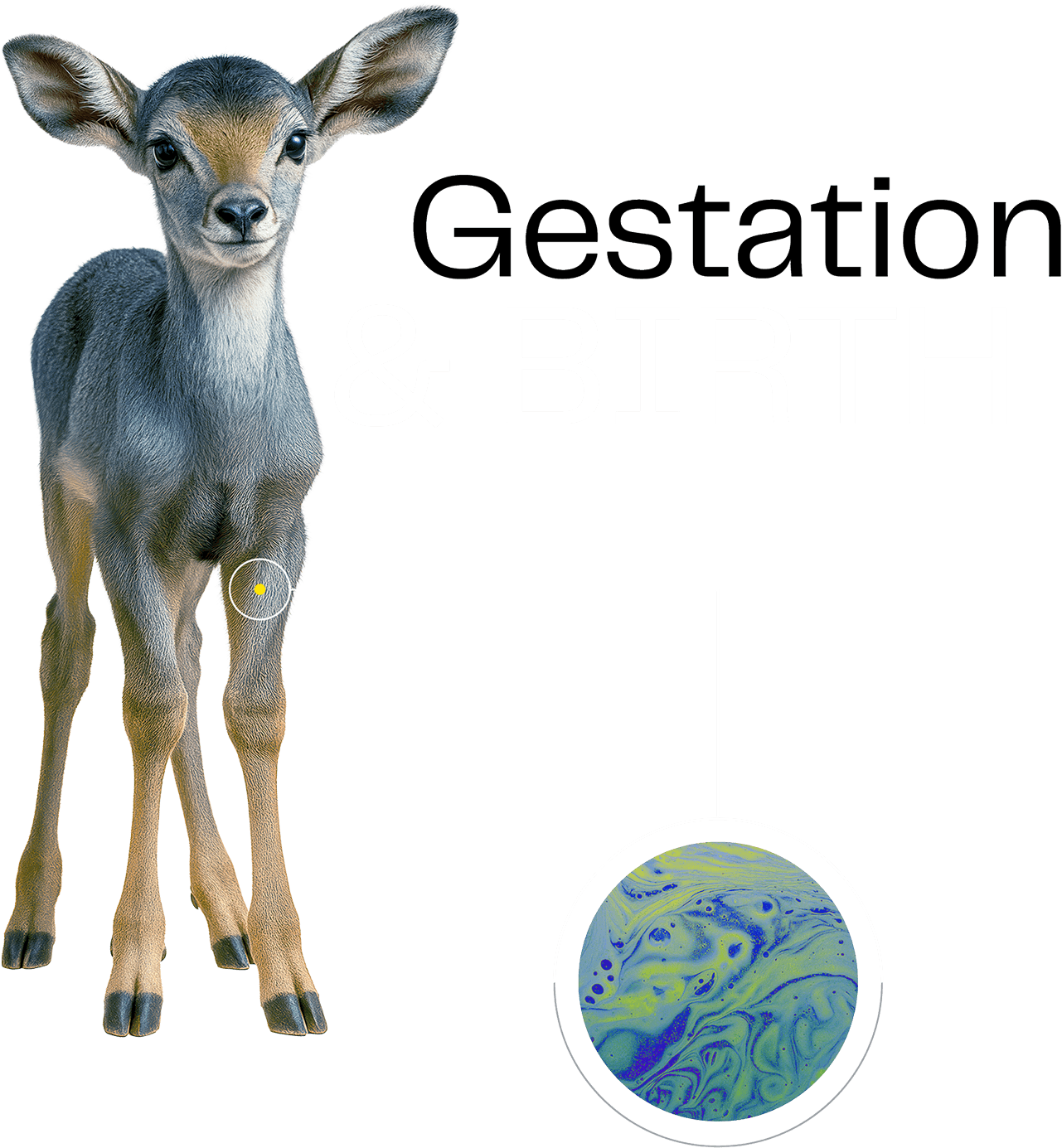
Once we have our edited cell lines and robust knowledge of aART in antelopes, we will be ready for the next crucial step in bluebuck de-extinction: cloning via somatic cell nuclear transfer, or SCNT. We will transfer nuclei with bluebuck genetic variants into an antelope oocyte that has had its own nucleus removed and, once that cell begins to develop, transfer that developing embryo into an antelope surrogate mother for gestation and, ultimately, birth.



ADVISORS

Bluebuck
Project Advisors
This work is guided by a world-class team of scientific advisors — leading experts in genetics, conservation, embryology, and ancient DNA — each helping turn the once-impossible into reality.
These advisors help Colossal navigate complex challenges, uncover new opportunities, and build a foundation for the future of de-extinction.

 VISIT
VISITCompany
advisors