
 002A-00 woolly mammoth

 View More

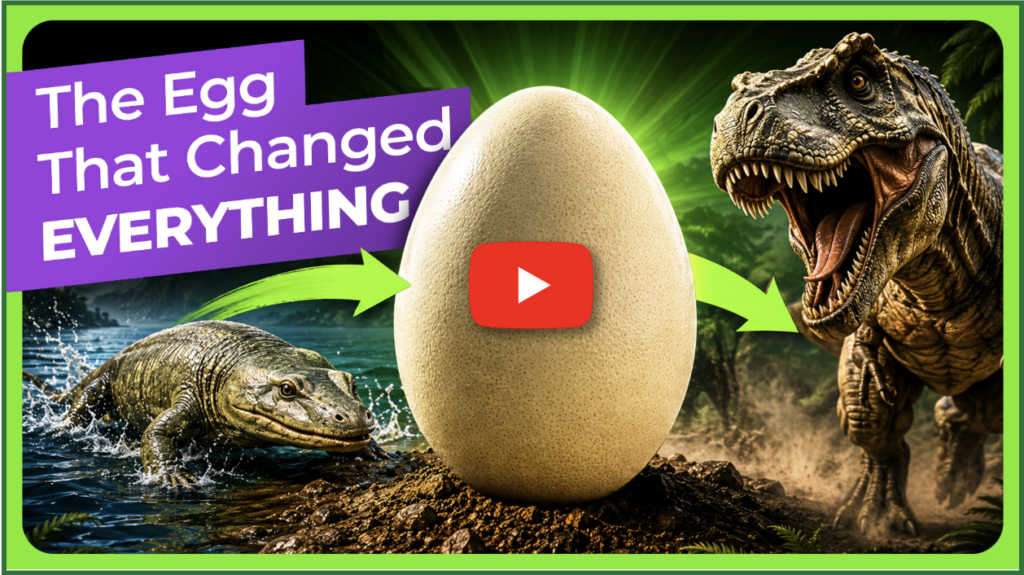
Our newest educational video, How One Egg Changed Life Forever, looks at the amniotic egg and the role it played in shaping life on Earth. Alongside it, Colossal Biosciences is offering free lesson materials designed for science classrooms. The video is available now on our YouTube channel.
The amniotic egg appeared more than 300 million years ago. After that, vertebrates no longer had to return to the water to reproduce.
What the Video Covers
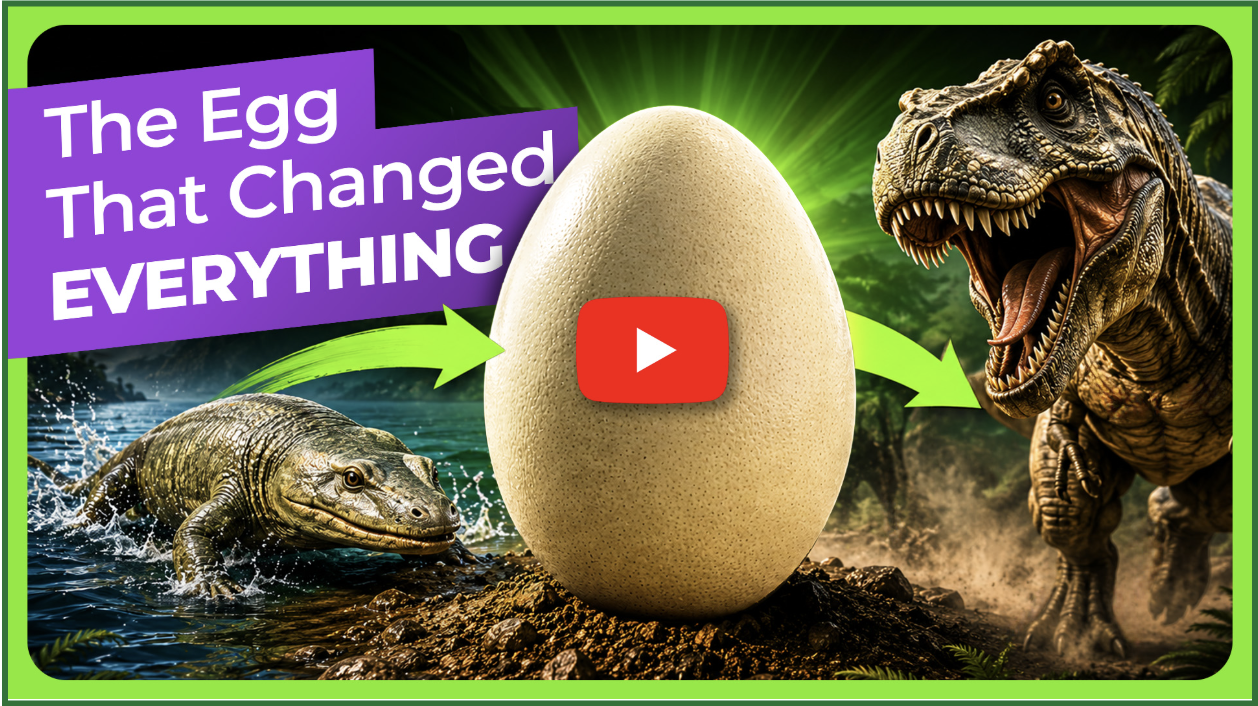
How did life escape the water and conquer land? The answer may be one of evolution’s most important inventions: the amniotic egg. More than 300 million years ago, the evolution of the amniotic egg helped vertebrates break their reproductive dependence on water, opening the continents to an extraordinary new branch of life. Those early amniotes would ultimately give rise to reptiles, dinosaurs, birds, mammals and, yes, even humans.
This is the incredible story of the amniotic egg and how it changed life on Earth.
From the amnion, chorion, yolk sac and allantois to the evolution of the eggshell, the video explores how the amniotic egg became a self-contained life-support system for developing embryos. It also looks at some of the strangest and most remarkable eggs alive today, from tiny hummingbird eggs and enormous ostrich eggs and more.
But the story of the egg isn’t over.
Scientists at Colossal Biosciences have now developed an artificial egg designed to support bird development outside the natural eggshell. The technology has already been used to hatch healthy chicks and could eventually play a role in avian conservation, genetic rescue, and the de-extinction of the South Island giant moa, an extinct bird whose enormous eggs were around 80 times the volume of a chicken egg.
For hundreds of millions of years, the amniotic egg changed the evolution of life.
Now biotechnology may be changing the egg itself.
Download Free Classroom Resources
The free teacher guide turns the video into a multi-day unit. It includes:
- Teacher Guide
- Viewing Lab 1: Can Mass Get Through a Shell?
- Lab 2: What Does a Shell Look Like Up Close?
- Five In-Class Activities (“Missions”)
Learning objective: By the end of this lesson, students should be able to explain the three jobs any shell replacement must do: allow gas exchange, supply calcium to the developing embryo, and hold a steady temperature for weeks. They should also be able to connect each of those jobs to the engineering challenge Colossal’s team set out to solve.
