
 002A-00 woolly mammoth


 View More

So you want to work in the emerging field of de-extinction and species preservation?
Every day, people ask us how they can join Colossal—or help protect the planet’s biodiversity. The answer starts with curiosity.
Whether you’re drawn to life in the lab, the field, or the classroom, a career in animal conservation today isn’t a single path. It’s a network of innovators, scientists, and storytellers working together to defend the living world.
At Colossal Biosciences, we’re restoring the past to protect the future. By developing the tools of de-extinction, we’re building the next generation of conservation technology. From cloning endangered red wolves to developing vaccines for elephants and rewilding habitats with our partners around the world, our work brings together genetic engineering, animal care, and conservation science.
If you’re dreaming of a career that protects what’s wild, this guide to Colossal Biosciences careers will help you find your place in the movement—no matter where you start.
Species Restoration
Our Species Restoration teams are working to restore iconic species like the woolly mammoth, dodo, thylacine, South Island giant moa, bluebuck, and the world’s first de-extinct species, the dire wolf — projects that demand innovation and global collaboration.
These teams include experts in Cell Engineering, Stem Cell Biology, Genome Engineering, and Embryology. We’re often looking for motivated Research Associates and Scientists who bring curiosity, precision, and a love of problem-solving to their work.
If you’re choosing what to study, several fields can provide a strong foundation for contributing to this work:
- Genetics: A strong understanding of genetics will be essential, as our work involves manipulating genes to bring back extinct species. Focus on courses in molecular biology, genetic engineering, and gene editing technologies like CRISPR.
- Conservation Biology: Build an understanding of ecosystems, biodiversity, and how to protect and restore them for future generations.
- Biotechnology: Learning the principles and techniques behind biotechnology, including genetic engineering and cloning, will prepare you for the cutting-edge work we do here.
- Ecology: Understanding how species interact with each other and their environments is crucial for assessing the ecological impact of our work and ensuring that de-extinct species thrive in their habitats.
- Ethics and Bioethics: Courses in bioethics and environmental ethics can help you navigate these important considerations in a responsible way.
- Computer Science/Data Science: Developing skills in computational biology, bioinformatics, and data science will help you interpret complex biological data, which is key in genetic research.
The right path depends on the role you want to pursue. For our laboratory teams, hands-on research experience is especially valuable:
- Research Associates typically hold a Bachelor’s or Master’s degree with hands-on lab experience in mammalian cell culture, stem cell reprogramming, cloning, embryology, or gene editing.
- Scientists and Senior Scientists usually have post-graduate or Ph.D.-level experience in related fields, with advanced training that extends beyond coursework.
 “Working at Colossal means building the future of species restoration—every day brings a new challenge that no one has faced before,” says Dr. Anna Keyte, Avian Species Director. “We’re looking for curious, adaptable scientists who love solving complex problems and who see obstacles as opportunities to push the boundaries of what’s possible in conservation and biotechnology.”
Animal Operations
United by a shared passion for animals and the ecosystems they inhabit, our Animal Operations team is home to specialists in animal husbandry, wildlife conservation, and applied science. Working under the Colossal Foundation, Colossal’s non-profit arm, the team helps apply our science and technology to species at risk today.
One area of focus is bioacoustics, where we use sound and machine learning to monitor wildlife and ecosystems and computer vision to decode behavior, identify individual animals and monitor animal health. For this work, we often look for computational biologists with expertise in genome analysis, AI, and behavioral modeling.
 “Understanding how animals interact with each other and the world around them is critical to the de-extinction project and conservation – the future of conservation and species survival is rooted in new perspectives, new ways of seeing and sensing the world, and an open mind to thinking differently about how we build and deploy technologies,” says Joris Komen, Sr. AI Research Scientist.
We’re also expanding assisted reproductive scientists and Exogenous Development, the team behind innovations like Colossal’s Artificial Egg—an incubation system designed for moa de-extinction, which supports complete avian embryo development outside a biological eggshell.. This group engineers new tools at the intersection of biology and technology to advance animal science and conservation. We hire mechanical, biomedical, and design engineers, as well as device development bioengineers, who bring creative solutions to some of the most complex biological challenges on the planet.
 “Our team is composed of experts from a variety of disciplines, but the number one quality we share is a deep love for animals,” says Stefano Daza Arango, Manager of Conservation Partnerships. “Passion and pragmatism go hand in hand. Working with animals can be hard, dirty and unpredictable—but it’s deeply rewarding.”
Explore the Colossal Foundation’s Conservation Projects and Partners.
Corporate and Brand
Colossal’s mission extends beyond the lab. Our corporate functions such as Human Resources, Finance, Information Technology, Marketing, Project Management, and Legal, and IT, help keep our operations running efficiently as we grow across continents.
While openings in these areas occur less frequently, we seek people who thrive in fast-paced, collaborative environments and bring both analytical rigor and creative thinking to their work.
“Colossal empowers team members to contribute to the company’s success,” says Amanda Bastawros, VP & Head of Human Resources. “We’re looking for passionate, inquisitive people who aren’t afraid to roll up their sleeves and find solutions to puzzles that have yet to be solved.”
The Colossal Mindset
Whether you’re working in the laboratory, in the field, or in the office, success at Colossal comes down to one thing: passion for the mission.
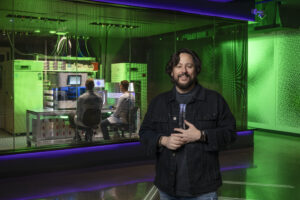 “I really look for that sparkle in people’s eyes for the job,” explains Co-founder & CEO Ben Lamm. “You can always teach a skill, but that passion and drive is the thing that I value most when interviewing people.”
At Colossal, we move quickly because extinction won’t wait. We look for people who bring expertise, curiosity, and a sense of wonder to everything they do—because every discovery brings us closer to a wilder, more biodiverse planet.
Join our Mission to Make Extinction a Thing of the Past
Colossal is building the next generation of conservation tools. From reviving lost species to protecting the ones still with us, we’re rewriting what’s possible for the natural world.
Whether you’re a student exploring biology, an engineer fascinated by biotechnology, or an educator inspiring the next generation, the work of defending life on Earth needs your voice and your skill.
Ready to be a part of it?
Explore open roles and opportunities or stay connected with us on Instagram.
The future of conservation starts with those bold enough to imagine a wilder world.
