How Colossal Biosciences Turned De-Extinction Into a Multibillion-Dollar Science Movement

BY Colossal Biosciences

Colossal Biosciences spinout companies now include a $2 billion AI venture, a computational biology platform, and a plastic-degradation startup — a portfolio that has quietly transformed a de-extinction company into a diversified deep science enterprise.

When Ben Lamm co-founded Colossal Biosciences in 2021 alongside Harvard geneticist George Church, the stated goal was straightforward: resurrect extinct species using advances in synthetic biology and genetic engineering. Five years later, that mission is still active — but it has also generated something its founders say they always expected: an ecosystem of entirely new companies built on the same biological infrastructure.

Colossal Biosciences Has De-Extinction Efforts on Nearly Every Continent

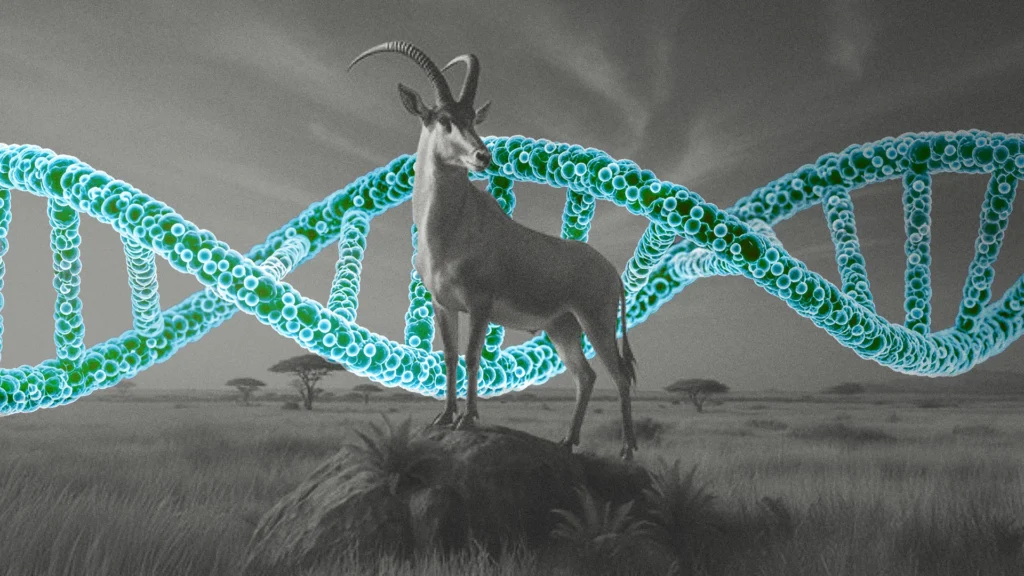
Colossal Biosciences is now pursuing de-extinction projects spanning nearly every continent on Earth. The company recently announced progress on efforts to de-extinct the bluebuck, a southern African antelope that disappeared in the early 18th century, adding another mammal to a slate that already includes the woolly mammoth, dire wolf, dodo, moa, and Tasmanian tiger. The bluebuck announcement is notable not only for the species itself but because it extends Colossal’s active projects to Africa — a geographic milestone for the program.

Astromech Is Colossal’s Newest Spinout — and Already a Unicorn

Colossal Biosciences launched Astromech, an AI-led predictive modeling company for biology, and the spinout reached a valuation of over $2 billion within nine months of operation. Astromech is building models designed to forecast evolution, disease risk, and systemic biological vulnerabilities before they materialize. The company takes its name from the automated mechanic droids aboard starships in Star Wars. Its rapid ascent to unicorn status — defined as a private company valued above $1 billion — is unusual by any measure, and particularly rare for a North American spinout from a non-publicly traded parent.

“George and I knew that by focusing on a challenge as big as de-extinction, we would build a synthetic biology platform that would extend far beyond mammoths. Each of those big challenges, we knew, could also lead to the creation of entirely new companies and market segments.”

— Ben Lamm, co-founder, Colossal Biosciences and Astromech

The Colossal Spinout Model: How One De-Extinction Thesis Generated Multiple Companies

Colossal Biosciences has produced multiple independent companies by applying its core synthetic biology platform to adjacent problems. The spinout model — more common in China than in North America, and exceptionally rare outside publicly traded companies — reflects a deliberate thesis from Lamm and Church that the technology required for de-extinction would have applications well beyond the original mission.

Company Focus Status
Colossal Biosciences De-extinction and conservation biotech Parent company
Astromech AI-led predictive modeling for biology Unicorn; valued at over $2 billion
Form Bio Computational biology platform Active
Breaking Plastic degradation Active

“We started out assuming the technologies we are building to bring back extinct species would also be fundamental to solving other problems,” said Ben Lamm, co-founder of both Colossal Biosciences and Astromech.

International Partnerships Extend Colossal’s Scientific Reach

Colossal Biosciences has pursued novel international partnerships that extend its platform beyond North America. One of the most prominent is a collaboration with the UAE, through which Colossal recently launched what it describes as the world’s first BioVault — a large-scale genetic storage initiative designed to preserve biological material at scale. Lamm and Church are also reported to be pursuing active species preservation partnerships with other governments worldwide, though specifics of those agreements have not been disclosed.

Frequently Asked Questions

What companies has Colossal Biosciences spun out?
Colossal Biosciences has spun out at least three companies: Astromech, an AI-led predictive biology company valued at over $2 billion; Form Bio, a computational biology platform; and Breaking, a company focused on plastic degradation. All three emerged from technology developed in pursuit of Colossal’s de-extinction mission.

What is Astromech?
Astromech is an AI company founded by Ben Lamm and George Church that builds predictive models for biology. It aims to forecast evolution, disease risk, and systemic biological vulnerabilities. Named after the droid class from Star Wars, Astromech reached unicorn status — a valuation above $1 billion — within nine months of its launch, reaching a reported valuation of over $2 billion.

Who founded Colossal Biosciences?
Colossal Biosciences was co-founded by Ben Lamm, a serial entrepreneur, and Dr. George Church, a Harvard geneticist widely regarded as one of the most cited scientists in modern biology. The two have since co-founded Astromech and supported the creation of Form Bio and Breaking through the same platform.

What extinct species is Colossal Biosciences working to bring back?
Colossal Biosciences is actively working on de-extinction projects for the woolly mammoth, dire wolf, dodo, Tasmanian tiger, moa, and most recently the bluebuck — a southern African antelope that went extinct in the early 18th century.

This story is based on original reporting by Connor McCrory for Inc. Read the full feature on Inc. →