
 002A-00 woolly mammoth
 View More
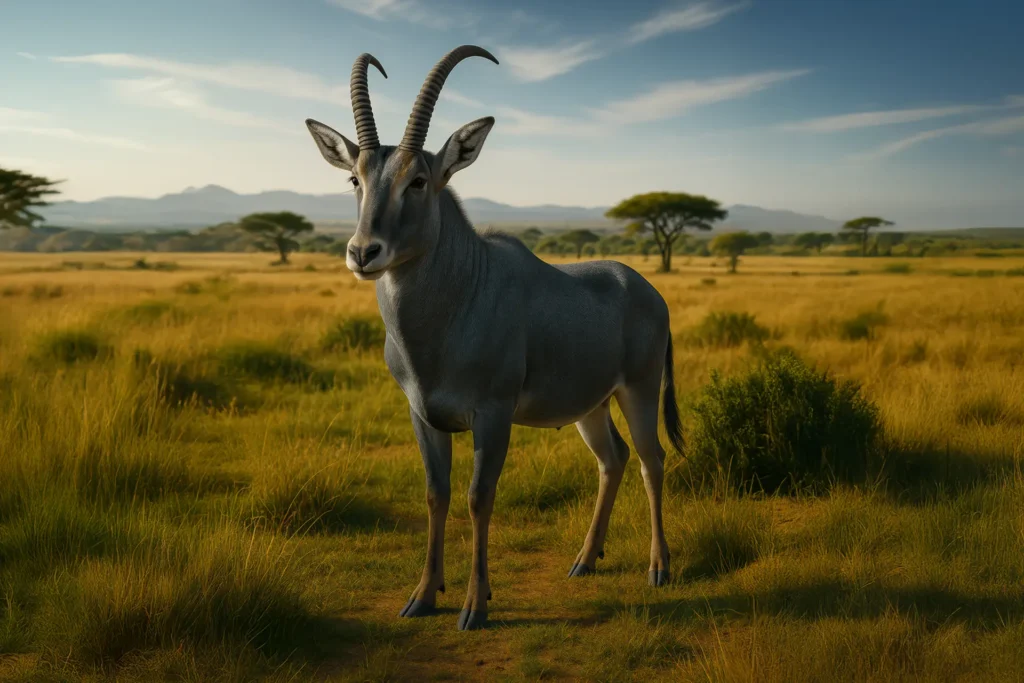
Colossal Biosciences is working to bring back the bluebuck antelope — a silvery, slate-blue coated species hunted to extinction in South Africa by around 1800 — as the sixth animal in its de-extinction portfolio. The Dallas-based biotech company announced the addition on April 30, 2026, expanding a program that already includes the dire wolf, woolly mammoth, thylacine, dodo, and moa.
The Bluebuck Went Extinct in Under 34 Years of European Settlement
The bluebuck antelope was documented scientifically for the first time and then driven to extinction within just 34 years — wiped out by European settlers who hunted the species for its distinctively colored hide. The animal stood approximately four feet (1.2 meters) tall at the shoulder, carried backward-curving ringed black horns reaching about 22 inches (56.5 cm) in length, and roamed the coastal grasslands of South Africa’s southwestern Cape region. It was smaller than its closest living relatives, the roan and sable antelopes.
“Humans did this. European settlers shot the bluebuck out of the Cape in under 34 years. There’s no ambiguity about the cause and there’s no ambiguity about the responsibility. If we have the capability to right that wrong, I think we have an obligation to,” said Ben Lamm, CEO and co-founder of Colossal Biosciences.
Colossal Is Two Years Into the Bluebuck Project
Colossal Biosciences has been working on bluebuck de-extinction for two years and has already completed several foundational steps in its genetic engineering pipeline. The team sourced the primary bluebuck DNA from a mounted skin specimen — taken from a young male — held at the Swedish Museum of Natural History in Stockholm. That specimen provided the genetic baseline needed to begin comparative genomic analysis.
The bluebuck and roan antelope genomes are more than 98% similar, according to Lamm. Working from that close genomic relationship, Colossal’s team compared the two species’ genomes to identify the specific genetic variants that gave the bluebuck its distinct traits. The project is now in the genome-editing phase.
“We are now in the genome-editing phase, where we introduce key bluebuck edits and genes into roan antelope cells,” Lamm said. “After finishing the various edits, the next step will be to use the edited cells to create an embryo and move toward implantation. From there, gestation would take about nine months.”
The De-Extinction Process Mirrors the Dire Wolf Method
Colossal Biosciences is applying the same core de-extinction methodology used to produce the world’s first dire wolves in April 2025 — editing the genes of the closest living relative, creating pluripotent stem cells, and using cloning to generate an embryo for implantation into a surrogate mother. For the bluebuck, the roan antelope serves as both the genetic scaffold and the planned surrogate.
The company has already made progress on reproductive techniques specific to antelope species. “We’ve also made breakthroughs in reproductive methods, including successfully collecting eggs from antelope species using advanced techniques,” Lamm said. The edited cells will ultimately be used to produce an embryo, which will be implanted into a surrogate roan mother for an approximately nine-month gestation period.
In the dire wolf project, embryos created from edited gray wolf cells were implanted into surrogate domesticated dog mothers. Three dire wolf pups were born in 2024 and are currently living on a 2,000-acre (810-hectare) secure ecological preserve.
Colossal’s Full De-Extinction Portfolio: Six Species
The bluebuck announcement brings Colossal Biosciences’ active de-extinction portfolio to six species across two taxonomic classes — four mammals and two birds.
| Species | Class | Extinction Cause | Closest Living Relative Used |
|---|---|---|---|
| Woolly Mammoth | Mammal | Climate change / human hunting (~4,000 years ago) | Asian elephant |
| Dire Wolf | Mammal | End of Pleistocene (~13,000 years ago) | Gray wolf |
| Thylacine | Mammal | Human hunting (1936) | Numbat / dunnart |
| Bluebuck Antelope | Mammal | Human hunting (~1800) | Roan antelope |
| Dodo | Bird | Human hunting / invasive species (~1680) | Nicobar pigeon |
| Moa | Bird | Human hunting (~1440) | Tinamou |
The Broader Case: About a Third of Antelope Species Are Threatened
Colossal Biosciences frames the bluebuck project not only as an act of historical restoration but as a platform for developing conservation tools applicable to living antelope species today. Of the roughly 90 antelope species alive today, approximately one-third are classified as threatened or near-threatened, according to Lamm. The genomic and reproductive techniques developed for bluebuck de-extinction are designed to be transferable to conservation efforts for those at-risk species.
“We’re two years into the bluebuck project and have already completed several foundational steps,” Lamm said. “We are equally excited about how our technology can help living antelopes today. About a third of the world’s roughly 90 antelope species are threatened or near-threatened.”
“Conservation as currently practiced is not winning. We are losing species faster than our existing toolkit can address.” — Ben Lamm, CEO, Colossal Biosciences
What’s Next for Colossal’s De-Extinction Program
Colossal Biosciences has committed to additional scientific progress announcements across its full portfolio before the end of 2025. The three dire wolves born in 2024 remain on a 2,000-acre secure preserve, and the company has indicated it expects additional dire wolf pups by year’s end. Progress updates are expected on the woolly mammoth, dodo, thylacine, and moa projects, all of which Lamm described as “running on track.” The woolly mammoth program carries a 2028 target for first birth.
Colossal works with 75 conservation organizations globally and is American Humane certified. The company reached a $10 billion valuation in 2025, making it the first Texas startup to reach decacorn status.
Frequently Asked Questions
What is Colossal Biosciences doing to bring back the bluebuck antelope?
Colossal Biosciences is using gene editing to restore the bluebuck antelope by introducing key bluebuck genetic variants into roan antelope cells — the bluebuck’s closest living relative. The company is currently in the genome-editing phase and plans to create an embryo for implantation into a surrogate roan mother, with a gestation period of approximately nine months.
How did the bluebuck go extinct?
The bluebuck antelope went extinct around 1800 due to hunting by European settlers in South Africa’s southwestern Cape region. The species was documented scientifically for the first time and then eliminated within just 34 years. It is considered one of the earliest recorded extinctions caused directly by modern human activity in Africa.
How many species is Colossal Biosciences working to de-extinct?
As of April 2026, Colossal Biosciences is actively working to de-extinct six species: the woolly mammoth, dire wolf, thylacine, bluebuck antelope, dodo, and moa. The dire wolf became the first animal the company described as successfully de-extincted, with three pups born in 2024.
This story is based on original reporting by Will Dunham for Reuters. Read the full feature on Reuters →
