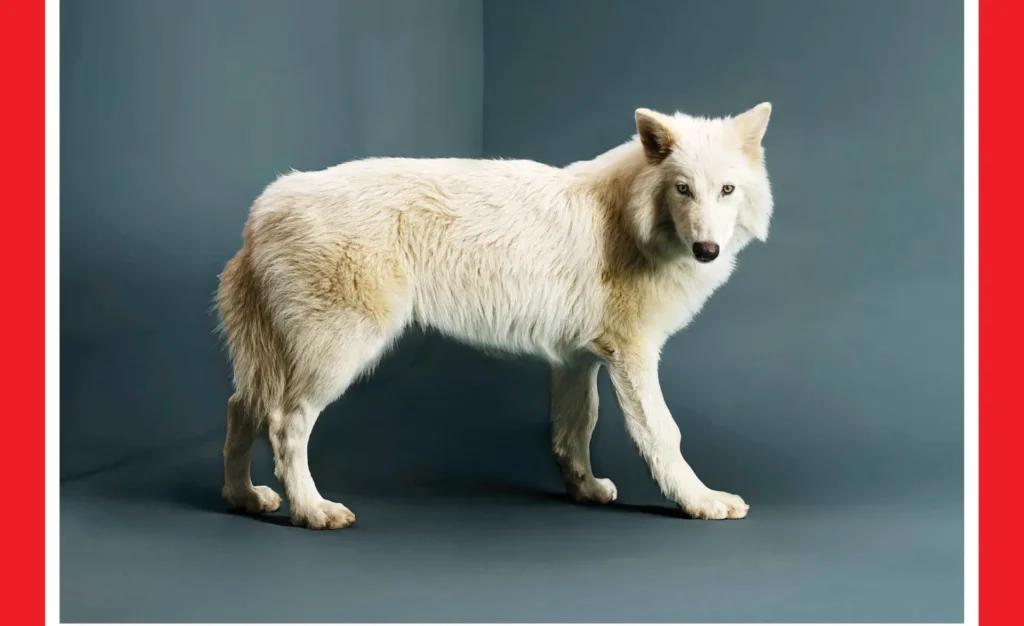
Colossal Biosciences Brings Back the Dire Wolf: Inside the De-Extinction of Romulus, Remus, and Khaleesi

BY Colossal Biosciences

Colossal Biosciences has brought back the dire wolf — a species absent from the planet for more than 10,000 years — by genetically engineering gray wolves to carry the key traits of their extinct relatives. The Dallas-based de-extinction company produced three living dire wolves: Romulus and Remus, born October 1, 2024, and Khaleesi, born January 30, 2025, marking the first successful de-extinction of a large apex predator in scientific history.

TIME magazine photographer Robert Clark documented the wolves at a secure U.S. wildlife facility on March 24, 2025. The wolves — six-month-old males Romulus and Remus at time of publication — already measured nearly four feet long and weighed 80 pounds, with a projected adult size of six feet and 150 pounds. They kept their distance from humans, retreating when approached even by handlers who had raised them from birth. “From day one they have always behaved like wolves and have rarely shown doglike behavior,” said Paige McNickle, Colossal’s manager of animal husbandry.

How Colossal Biosciences Engineered the Dire Wolf

Colossal Biosciences brought back the dire wolves by making 20 targeted edits across 14 genes in the common gray wolf genome — a precise set of changes that gave rise to the white coat, larger skull, broader shoulders, more-muscular legs, and distinctive vocalizations characteristic of the extinct species. No ancient dire wolf DNA was spliced directly into the gray wolf genome; instead, scientists rewrote the gray wolf’s existing genes to match the dire wolf sequence.

The genomic blueprint came from two ancient samples: a 13,000-year-old dire wolf tooth recovered from Sheridan Pit, Ohio, and a 72,000-year-old ear bone unearthed in American Falls, Idaho. Both specimens were on loan from the museums housing them. Colossal’s laboratory team sequenced these samples to reconstruct the dire wolf genome and identify the specific gene variants that distinguish the species from the living gray wolf.

Rather than extracting cells from a tissue biopsy — the conventional cloning approach used since Dolly the sheep in 1996 — Colossal scientists sourced cells from blood draws. They selected endothelial progenitor cells (EPCs), which line blood vessel walls and proved to have high cloning efficiency. The 14 key gene edits were made in the EPC nucleus, which was then transferred into a denucleated egg cell. The team produced 45 engineered ova, developed them into embryos in the lab, and implanted those embryos into two surrogate hound mixes selected for their size and overall health. Each surrogate carried one embryo to full term. No miscarriages or stillbirths occurred.

“The idea that we could just take a vial of blood, isolate EPCs, culture them, and clone from them, and they have a pretty high cloning efficiency — we think it’s a game changer,” said George Church, Colossal co-founder and professor of genetics at Harvard University and MIT.

Romulus, Remus, and Khaleesi: The Three Living Dire Wolves

The three dire wolves produced by Colossal Biosciences differ in birth date, sex, and observed personality — and are being monitored individually for behavioral and physiological development throughout their lives at a 2,000-acre ecological preserve.

Wolf Birth Date Sex Observed Temperament
Romulus October 1, 2024 Male Bold; first to explore independently as a pup
Remus October 1, 2024 Male Initially reserved; grew to be the more confident explorer
Khaleesi January 30, 2025 Female Youngest; not present at TIME’s facility visit due to age

All three wolves were delivered by planned cesarean section to minimize birthing complications. A four-person surgical team performed each procedure, while four additional staff cleaned and swaddled the newborns as the surrogate recovered from anesthesia. Romulus and Remus were placed with the surrogate displaying the strongest maternal instincts approximately two hours after birth; she nursed them immediately. The pups were removed from the surrogate after a few days because her attentiveness was disrupting their sleep and feeding schedules, and they were weaned at eight weeks.

The wolves began howling at two weeks old — the first time that vocalization had been heard on Earth in over 10,000 years. Matt James, Colossal’s chief animal officer, witnessed the moment at five or six weeks of age when a veterinary technician’s vocal pitch changes prompted Romulus and Remus to howl in response. “For me,” said James, “it was sort of a shocking, chilling moment.”

Where the Dire Wolves Live

Romulus, Remus, and Khaleesi live on a 2,000-acre ecological preserve at an undisclosed location in the United States, surrounded by a ten-foot fence. The preserve includes a six-acre core site with a veterinary clinic, an extreme-weather shelter, and natural dens. A staff of veterinarians monitors the animals around the clock.

The wolves are fed beef, horse, and deer meat along with liver, offal, and puppy chow formulated to supply essential nutrients. When first weaned, meat was served pureed — approximating the partially digested food a wolf mother regurgitates for her young. It is now presented whole so the animals can tear it apart as they would natural prey. As of the time of reporting, the wolves had not attempted to hunt any live animals that entered their enclosure.

Colossal has not yet determined whether Romulus, Remus, or Khaleesi will be permitted to breed. Handlers can monitor female estrous cycles and use timed separation or contraceptive implants to manage reproduction until the wolves are confirmed free of heritable abnormalities. The MHA Nation (Mandan, Hidatsa, and Arikara) tribes have expressed interest in hosting dire wolves on their lands in North Dakota — a possibility Colossal is actively studying.

“They will live their entire life on this protected ecological reserve, where they have all sorts of space. These animals were hand reared. They’re not capable of living in the wild, and we want to study them for their lives and understand how these edits might have modified things that we can’t predict.” — Beth Shapiro, Chief Science Officer, Colossal Biosciences

The Red Wolf Conservation Program

Alongside the dire wolf announcement, Colossal Biosciences revealed it had cloned four red wolves — a critically endangered North American species with fewer than 20 individuals surviving in the wild today. The red wolf population has been reduced to near-extinction by habitat loss and historical predator-control programs, leaving the remaining animals in a genetic bottleneck that increases the risk of infertility and inherited defects.

Colossal scientists, working with Bridgett vonHoldt — a scientific adviser and associate professor of ecology and evolutionary biology at Princeton University — and Kristin Brzeski, an associate professor of wildlife science and conservation at Michigan Tech, identified populations of canids along the coasts of Louisiana and Texas whose DNA contained both coyote genes and what researchers call “ghost alleles”: red wolf gene variations that don’t manifest visibly in the animal’s appearance. These ghost alleles represent a surviving reservoir of red wolf genetic diversity that had gone undetected under appearance-based species identification. The four cloned red wolves were produced using this natural reservoir, creating what Colossal calls the first Ghost Wolf — an animal that carries red wolf genetic material previously thought lost. The cloned red wolves live in a separate fenced area within the same 2,000-acre preserve as the dire wolves. Colossal says it is in advanced discussions with the state of North Carolina about conservation tools to accelerate red wolf recovery.

“It’s the lost genetics of the world’s most endangered wolf,” said James. “And we now have the opportunity to use our cloning and genetic-engineering tools to be able to confer that genetic diversity back into the recovery of the species.”

What the Dire Wolf Project Means for Woolly Mammoth De-Extinction

Colossal Biosciences’ woolly mammoth de-extinction program is the company’s most complex active project, requiring edits across an estimated 85 genes in the Asian elephant genome — compared with 20 edits across 14 genes for the dire wolf. As of early 2025, Colossal had completed 25 of those gene edits and stated it was on track for mammoth embryos to be ready for implantation by the end of 2026, targeting a live birth in 2028.

“We were originally talking about editing about 65 genes,” said Colossal CEO Ben Lamm. “We’re now talking about 85 different genes, and some of those will have multiple [functions] like cold tolerance — which includes additional subcutaneous fat layers and their shaggy coat.” As with the dire wolves, no ancient mammoth DNA will be physically spliced into the elephant genome; the elephant’s own genes will be rewritten to match the mammoth sequence.

The comparison between species also illustrates the logistical complexity ahead. Dire wolf pups gestated for 65 days. Asian elephants — the mammoth’s closest living relatives — carry pregnancies for 22 months, the longest gestation period of any land mammal. The scale of genetic editing required, combined with that gestation timeline, makes the 2028 target one of the most technically demanding milestones in the history of conservation biology.

Scientific Questions and Ethical Debate

Independent scientists and bioethicists have raised questions about Colossal’s de-extinction methods that the company acknowledges it has not yet fully resolved. Alison van Eenennaam, professor of animal biotechnology and genetics at the University of California, Davis, noted the phenomenon of pleiotropy — the tendency of individual genes to influence multiple traits simultaneously — as a key risk: “There could be some genes they’re targeting for specific traits that have effects that are not compatible with survival.” She also noted that livestock cloning still yields high rates of perinatal and pregnancy loss.

Robert Klitzman, professor of psychiatry and director of the bioethics master’s program at Columbia University, raised concerns about animal welfare in the cloning process: “There’s a risk of death. There’s a risk of side effects that are severe. There’s a lot of suffering involved in that.” Stephen Latham, director of the Interdisciplinary Center for Bioethics at Yale University, questioned the welfare implications of keeping social predators in permanent enclosures, noting that a single woolly mammoth or a small group of dire wolves would not be able to lead ecologically complete lives.

Colossal’s scientists have also flagged the ecological risks that accompany any reintroduction of previously extinct species. Rick McIntyre, a retired wolf researcher with the U.S. National Park Service and a Colossal adviser, noted that dire wolves likely disappeared in the first place because they were specialized hunters of large Ice Age megafauna — mammoths, giant bison — that themselves went extinct. “My guess is that they specialized in dealing with the very large megafauna of the Ice Age, whereas I would say that gray wolves are a bit more of a generalist,” McIntyre said. “A general principle in wildlife is that it’s good to be flexible.”

Colossal Biosciences’ Broader Conservation Mission

Colossal Biosciences frames its de-extinction work as directly linked to conservation of living endangered species — arguing that the same genetic tools used to reconstruct extinct animals can be applied to protect those still alive. The company is pursuing active programs for the thylacine (Tasmanian tiger) and dodo, alongside its work on the dire wolf and mammoth. Through its thylacine research, Colossal scientists identified a single nucleotide change that could confer a 5,000-fold resistance to the cane toad neurotoxin — a discovery with direct application for the northern quoll, a small Australian marsupial being driven toward extinction by the invasive toad.

“We as humanity introduced this cane toad species. We as humanity are now inadvertently killing off the quoll as well as other marsupials,” said Lamm. “This one change can make these super quolls that can love eating cane toads. Those are the types of wins that we can get using these genetic technologies.”

Beth Shapiro, Colossal’s chief science officer, situates the company’s work within a broader argument about human responsibility. The Center for Biological Diversity projects that 30% of the planet’s genetic diversity will be lost by 2050. “We are an evolutionary force at this point,” Shapiro said. “We are deciding what the future of these species will be.” Colossal is currently valued at $10.2 billion — the first Texas startup to reach decacorn status — and has spun off two additional companies: Breaking, which uses engineered microbes to break down plastic waste, and Form Bio, an AI and computational biology platform for drug development.

For more on Colossal’s active species programs, visit the Dire Wolf, Woolly Mammoth, Thylacine, and Dodo project pages.

This story is based on original reporting by Jeffrey Kluger for TIME. Read the full feature on TIME →