Colossal Biosciences’ Dire Wolves Turn One: Romulus and Remus at 120 Pounds and Growing

BY Colossal Biosciences

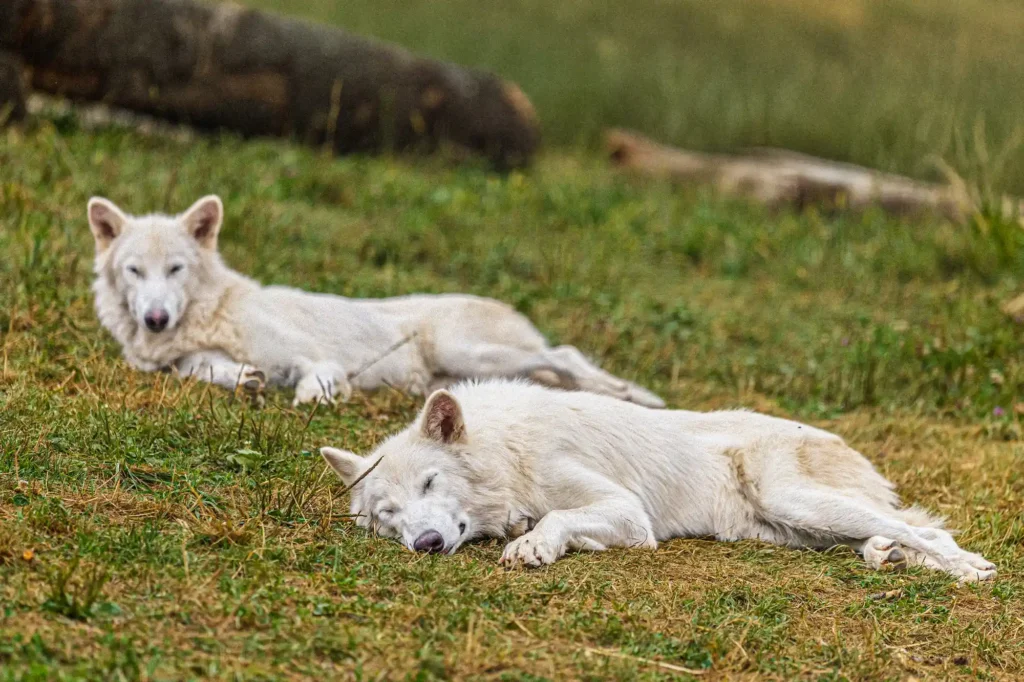
Colossal Biosciences’ dire wolves marked a milestone on October 1, 2025: the first birthday of Romulus and Remus, the first dire wolves to exist on Earth in more than 10,000 years. One year after their birth, both males exceed 120 pounds each, consume more than five pounds of meat daily, and continue to display behaviors consistent with wild wolf development — with no signs of abnormality reported by the company’s veterinary and animal care staff.

Romulus and Remus were born October 1, 2024, through Colossal Biosciences’ dire wolf de-extinction program, which used targeted gene editing of the gray wolf genome to reconstruct key dire wolf traits. Their younger sister, Khaleesi, arrived three months later. All three dire wolves live together on a 2,000-acre ecological preserve certified by the American Humane Society and registered with the USDA, monitored around the clock by veterinarians, drones, and live cameras with a dedicated full-time animal care staff.

Romulus and Remus at One Year: Size, Diet, and Development

At one year old, Romulus and Remus have grown substantially beyond their birth size and are expected to continue developing for another two years. Romulus is currently on track to reach 140 pounds ahead of his sibling. Both wolves are fed a diet that includes venison, beef, whole rabbits, bones for enrichment, and freeze-dried liver treats used for training.

Metric Detail
Current weight (each) More than 120 pounds
Daily meat consumption Over five pounds
Diet Venison, beef, whole rabbits, bones, freeze-dried liver treats
Growth period remaining Approximately two more years
Romulus projected weight On track to reach 140 pounds ahead of Remus

“We’ve witnessed their physical, emotional, and social growth — something no one has seen in 12,500 years,” said Matt James, Colossal’s chief animal officer. “Remus is fearless and bold, while Romulus is inquisitive, cautious, and confident.”

Beth Shapiro, Colossal’s chief science officer, noted that the gene edits underlying the wolves’ creation have performed as intended: “The dire wolves are thriving — beyond anything we could have imagined. Over the past year, we’ve learned so much from Romulus, Remus, and Khaleesi. Most importantly, the germline edits worked as expected, and the animals are healthy. You can see it in their size, strength, and their striking white coats.”

The Birthday Celebration: Rock Anthem and Custom Cake

To mark the occasion, Colossal commissioned a custom rock anthem from Emmy Award–winning musicians Stan Bush and Lenny Macaluso, known for songs including “The Touch” and “Never Surrender.” The resulting track, titled “Happy Birthday Dire Wolf,” features 1980s-style guitar arrangements and lyrics written to reflect the wolves’ development over their first year. A music video produced for the song places Romulus and Remus at the center of a kaleidoscopic visual chronicling their growth.

“You returned — two wild, majestic brothers. Ancient blood flows through your veins. Hear the howls. Silent cries so lost for centuries. Time to make a brand-new start.” — “Happy Birthday Dire Wolf,” Stan Bush and Lenny Macaluso

Colossal also partnered with Mishka, a luxury dog bakery based in San Francisco, to produce a custom three-tiered birthday cake for the wolves. Founder Olia Rosenblatt and her team spent 15 hours designing 3D wolf molds and constructing the cake, which was made from beef pâté, broth, liver, and other organic ingredients approved by Colossal’s animal husbandry team. The cake was decorated with sculpted mountains, trees, a moon, and wolf figures on top. Romulus and Remus ate the cake themselves; the moment was captured in the music video.

Dodo De-Extinction: A New Milestone

Alongside the dire wolf birthday, Colossal announced a significant advance in its dodo de-extinction program. On September 17, 2025, the company announced it had successfully cultured pigeon primordial germ cells (PGCs) — the reproductive precursor cells required to produce heritable genetic changes in birds, and a necessary step toward reviving the dodo.

“Only three bird species have ever had PGC culture conditions, and now pigeons,” said Ben Lamm, Colossal co-founder and CEO. “It’s very, very hard to do, and we did this in 18 months, so this was a very, very big step. This was a huge technology unlock for the dodo.” Based on this milestone, Lamm estimated that dodo birds could exist again within five to seven years, with that timeline potentially accelerating once gene editing begins.

Colossal’s Vision for De-Extinction

Colossal Biosciences continues to pursue active de-extinction programs for the woolly mammoth, thylacine, and moa alongside its dire wolf and dodo work. Lamm has described the company’s approach as a deliberate effort to make science broadly accessible and culturally engaging. “What we’re doing is complicated — sometimes exciting, sometimes scary,” Lamm said. “The only way to make science cool again, like NASA was for me as a kid, is to have all the hard conversations and bring people along for the ride.”

This story is based on original reporting by Moná Thomas for PEOPLE. Read the full feature on PEOPLE →