Colossal Biosciences and US Fish and Wildlife Service Partner to Biobank Every Endangered Species

BY Colossal Biosciences

The Colossal Biosciences US Fish and Wildlife Service partnership aims to collect and freeze cell and tissue samples from every species on the US Endangered Species List. Announced on June 25, 2026, the collaboration positions Colossal Biosciences — the Dallas-based de-extinction company behind the dire wolf, born in 2024 — and the federal wildlife agency to build a genomic library that could support both species recovery and, if necessary, future de-extinction.

The effort responds to a documented loss. The US Endangered Species List, established under the Endangered Species Act of 1973, now comprises more than 2,100 struggling species. In the past half century, only 54 species have recovered enough to be delisted, including the bald eagle and the giant panda, while 67 others went extinct despite federal protection — 21 of them in 2023 alone.

Colossal and US Fish and Wildlife will biobank every species on the Endangered Species List

The partnership commits Colossal Biosciences and the US Fish and Wildlife Service to collecting, sequencing, and cryopreserving genetic material from all 2,100-plus listed species. The goal is a complete genomic record that can be used either to gene-edit greater resilience into surviving populations or to de-extinct species whose numbers fall too far. The two organizations began discussing an effort of this scale five years ago.

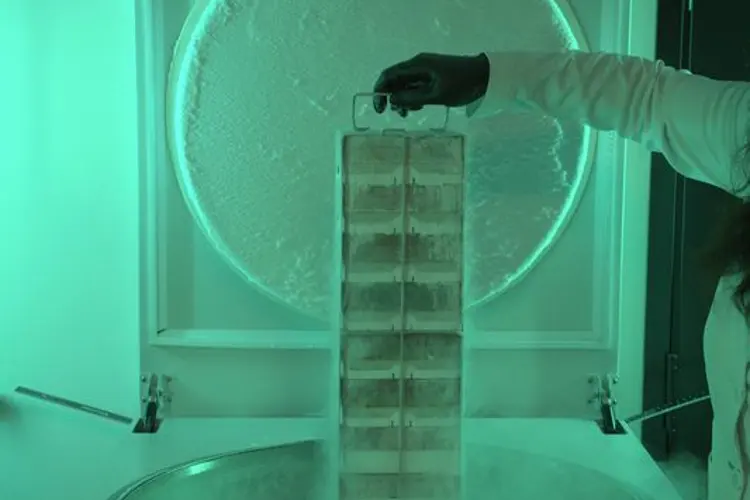
The agency had been aware of a frozen biobank Colossal was already building at its Dallas headquarters, where tissue and cell lines from roughly 200 species are kept in a liquid nitrogen bath at -274°F. That existing collection was not specific to listed species, and the agency wanted such an inventory to take shape. According to chief animal officer Matt James, the agency initially proposed roughly 100 species before Colossal pushed to target the entire list.

“We want a digital twin of nature — something like the old school library card catalog for life.” — Ben Lamm, Colossal Biosciences co-founder and CEO

US Fish and Wildlife Director Brian Nesvik framed the work as a complement to existing methods, stating the collaboration would advance understanding of how biobanking and genomics can contribute to the recovery and long-term resilience of imperiled species.

The scale of global extinction risk explains the urgency

The biobank effort is a response to extinction projections that extend far beyond the US list. While the US Endangered Species List names more than 2,100 species, the International Union for the Conservation of Nature (IUCN) red list identifies 48,600 species as threatened or endangered worldwide. The figures below illustrate the gap between species saved and species at risk.

Metric Figure Source
Species on US Endangered Species List 2,100+ US Fish and Wildlife Service
Species recovered and delisted (since 1973) 54 US Fish and Wildlife Service
Species that went extinct while listed 67 US Fish and Wildlife Service
Species threatened or endangered worldwide 48,600 IUCN Red List
Projected loss of global genetic diversity by 2050 Up to 30% Center for Biological Diversity

The Center for Biological Diversity projects that up to 30% of the planet’s existing genetic diversity could vanish by as early as 2050, driven by climate change, habitat loss, and environmental pollutants. The partnership is intended to preserve a usable genetic record before that loss occurs.

Sample collection is constrained by the realities of endangered species

Collecting genetic material from endangered animals is limited by the need for noninvasive handling. In the field, Colossal scientists are largely restricted to blood draws and skin biopsies, which constrains the cell types available. To gather a fuller range — including organ cells and gametes — the company relies on opportunities such as carcasses found in the wild or animals euthanized at cooperating zoos.

According to Matt James, those situations allow for a necropsy that yields a variety of tissues. Before freezing, Colossal and US Fish and Wildlife will fully sequence the cells to create a complete digital genome, and the company also aims to engineer some cells into induced pluripotent stem cells — blank biological slates that can be directed to become any cell type in the body. James noted that Colossal has derived pluripotent stem cells from elephants for the first time.

The biobank will be open-sourced and focused on prevention over de-extinction

The genetic library will be shared rather than held privately. Colossal and US Fish and Wildlife intend to open-source the biobank’s samples and sequences to labs and universities worldwide engaged in similar conservation and de-extinction work. As Ben Lamm put it, everyone should share in what the project gathers.

Both organizations emphasize keeping species alive over bringing them back. The whole-genome sequencing performed before freezing is intended to identify genes associated with traits such as disease mitigation and drought tolerance, which could then be used to engineer greater resilience into living populations facing climatic extremes and new pathogens. This effort runs parallel to Colossal’s separate February 2026 biobank partnership in Dubai, which targets cryopreservation of more than 10,000 species. Lamm described the federal collaboration as a global biological vision for helping animals go “from freezer to free.”

Colossal’s broader work spans active de-extinction programs for the woolly mammoth, dire wolf, dodo, and thylacine, alongside its expanding conservation initiatives.

This story is based on original reporting by Jeffrey Kluger for TIME. Read the full feature on TIME →