
 002A-00 woolly mammoth
 View More
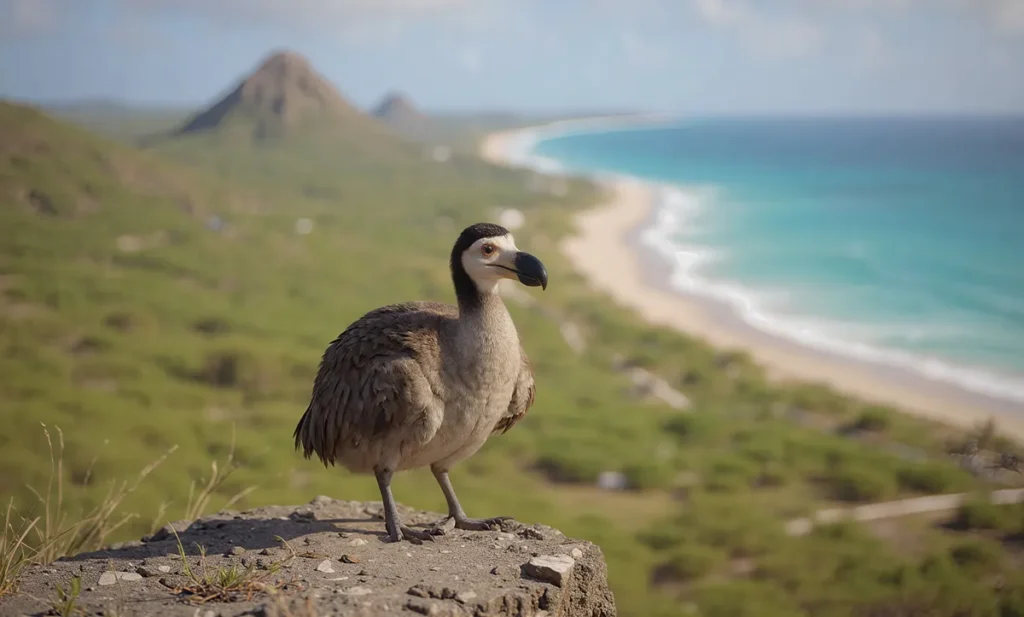
Colossal Biosciences dodo de-extinction now has a concrete scientific timeline: CEO Ben Lamm says the Dallas-based company expects to produce a living dodo in five to seven years, following a $120 million funding raise and a breakthrough in growing avian primordial germ cells in a laboratory setting.
The $120 million raise, announced September 17, 2025, is an extension of a $200 million funding round disclosed earlier that year, bringing Colossal Biosciences’ total capital raised to $555 million and its valuation to $10.3 billion. Investors in the latest financing included the US Innovative Technology Fund, ARCH Venture Partners co-founder Robert Nelsen, and filmmaker Peter Jackson, best known as director of the Lord of the Rings trilogy.
“Before its recent progress, Colossal didn’t have a clear timeline in its quest to resurrect the dodo. Now, CEO Ben Lamm says the company can produce one of the famous flightless birds in five to seven years.”
A Breakthrough in Avian Science Opens the Path to Dodo Revival
Colossal Biosciences’ path to dodo de-extinction runs through the pigeon. The company has successfully grown primordial germ cells from pigeons — a species closely linked to the dodo — which Lamm describes as a foundational step in avian de-extinction science. Primordial germ cells are the precursor cells that become sperm and eggs, and producing the next generation of birds requires establishing them first.
Unlike mammalian de-extinction approaches, avian de-extinction cannot rely on cloning technologies. Scientists must instead produce viable germ cells that can be introduced into a surrogate host bird to generate offspring carrying the target species’ genetic material. Colossal’s successful cultivation of pigeon primordial germ cells in a lab is the first major milestone enabling that process for dodo-related species.
The $120 Million Will Fund a Dedicated Avian Research Facility in Texas
Colossal Biosciences will direct a portion of the $120 million raise toward building an avian research facility in Texas, according to Lamm. The facility is intended to support the company’s work on bird-related de-extinction and conservation, including the dodo project. Colossal’s existing headquarters is a 55,000-square-foot facility in Dallas.
| Development | Detail |
|---|---|
| Funding raise (Sept. 2025) | $120 million extension of earlier $200M round |
| Total capital raised | $555 million |
| Valuation | $10.3 billion |
| Key investors | US Innovative Technology Fund, Robert Nelsen (ARCH Venture Partners), Peter Jackson |
| Avian science milestone | Successful lab cultivation of pigeon primordial germ cells |
| Dodo revival timeline | Five to seven years (per CEO Ben Lamm) |
| Planned infrastructure | New avian research facility in Texas |
Colossal’s De-Extinction Portfolio Spans Multiple Species
Colossal Biosciences is pursuing de-extinction and conservation science across several species simultaneously. The company previously announced the creation of a woolly mouse as part of its woolly mammoth revival program, and separately announced the birth of three dire wolf pups — a species absent from Earth for more than 12,000 years. The dodo project represents Colossal’s primary foray into avian de-extinction, a scientifically distinct challenge from the mammalian programs it has pursued to date.
Colossal Has Spun Off Two Separate Commercial Ventures
Colossal Biosciences has generated commercial spinoffs from its core research. A plastic-waste degradation company spun out of Colossal raised $10.5 million, and a software venture originating from the company has raised approximately $40 million, according to Lamm. These spinoffs reflect the company’s stated approach of creating broadly applicable science as a byproduct of its de-extinction work.
Lamm and Colossal co-founder George Church — a geneticist at Harvard University — are also developing a separate startup called Astromech, which is not affiliated with Colossal. Astromech, which has already raised $30 million, will use artificial intelligence and robotics to study how and why species develop in particular ways, including research into cancer suppression differences across animal species.
Frequently Asked Questions
When will Colossal Biosciences bring back the dodo?
CEO Ben Lamm has stated that Colossal Biosciences expects to produce a living dodo in five to seven years, a timeline made possible by the company’s recent success in growing pigeon primordial germ cells in a laboratory.
How is Colossal Biosciences approaching dodo de-extinction scientifically?
Because avian species cannot be resurrected through cloning, Colossal is cultivating primordial germ cells from pigeons — the dodo’s closest living relative — that can mature into sperm and eggs used to produce the next generation of birds carrying dodo genetic material.
How much has Colossal Biosciences raised in total?
As of September 2025, Colossal Biosciences has raised $555 million in total funding. The September 2025 raise of $120 million was an extension of a $200 million round announced earlier that year.
Who are the investors in Colossal Biosciences’ latest funding round?
The September 2025 $120 million raise included investment from the US Innovative Technology Fund, ARCH Venture Partners co-founder Robert Nelsen, and filmmaker Peter Jackson.
This story is based on original reporting by Emily Forgash for Bloomberg. Read the full feature on Bloomberg →
