
 002A-00 woolly mammoth
 View More
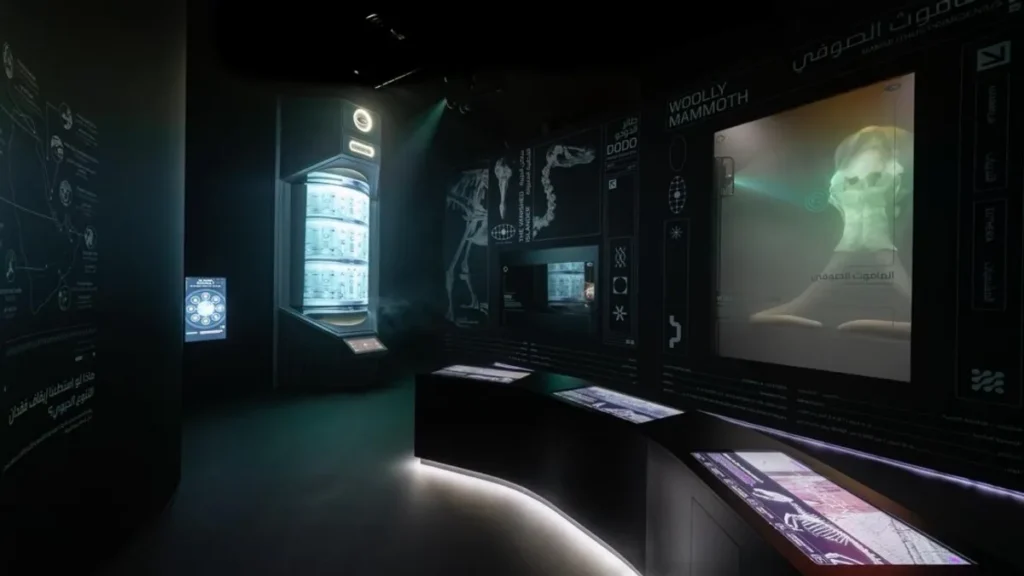
The Colossal BioVault is a cryogenic biobank designed to preserve cell and tissue samples from more than 10,000 species, announced February 3, 2026 as a partnership between Colossal Biosciences and the government of the United Arab Emirates. The Dallas-based de-extinction company, led by CEO Ben Lamm, will house the facility at the UAE’s Museum of the Future in Dubai.
The Colossal BioVault will focus first on the world’s 100 most imperiled species — including the snow leopard, savanna elephant, great white shark, and northern white rhino — with a goal of opening as early as 2026. All genomic data will be open-sourced, providing researchers and geneticists worldwide with access to the library for conservation and de-extinction research.
What the Colossal BioVault Is and How It Works
The Colossal BioVault will function as both a repository and an active laboratory. Visitors to the Museum of the Future will be able to observe scientists working with preserved genetic material in real time. Colossal is collaborating with 75 conservation organizations to collect cell and tissue samples from animals in the wild, which will be sent to the Dubai facility for sequencing and storage.
Samples will be stored at temperatures as low as -320°F. The scale of individual species representation is central to the BioVault’s mission — endangered species can become genetically bottlenecked when too few animals remain to sustain a viable breeding pool, and the same risk applies to biobanks that store too few samples per species.
“What sets the Colossal BioVault apart from other biobanking efforts is not just the scale but the breadth of species and populations we will bank. It is safe to assume that for a species such as the Asian elephant we would be looking at thousands of banked cells from hundreds of individuals.” — Matt James, Chief Animal Officer, Colossal Biosciences
The Colossal BioVault Builds on 50 Years of Cryogenic Preservation
The Colossal BioVault will be the largest and most ambitious biobanking effort to date, but it builds on a tradition of cryogenic preservation that dates back 50 years. Where earlier efforts have concentrated on storing a limited number of samples per species, the BioVault is structured around banking thousands of cells from hundreds of individuals — directly addressing the genetic bottlenecking that can undermine smaller collections.
The Global BioVault Network: Ben Lamm’s Vision
Colossal is not planning a single facility. The Dubai BioVault is designed as the first node in a distributed global network, with regional hubs positioned near major biodiversity centers around the world. Each hub would feed into a broader open-source genomic database accessible to researchers internationally.
“Our vision is that there is a major Colossal BioVault in distributed regions around major biodiversity hubs around the world and then branching into smaller regional spokes throughout these key regions. Over time, I envision seven to 10 distributed core Colossal BioVaults.” — Ben Lamm, Co-Founder and CEO, Colossal Biosciences
The initial rollout targets several hundred new species per year, with each species represented by samples from multiple individual animals to prevent the genetic bottlenecking that threatens both wild populations and preserved collections alike.
Funding: A Nine-Figure Investment From Colossal and the UAE
Colossal Biosciences reached decacorn status in 2025 with a market valuation exceeding $10 billion. A recent Series C funding round brought in $615 million in total, with $60 million invested directly by the UAE government. The exact investment earmarked for the BioVault has not been disclosed publicly, but both Colossal and the UAE have confirmed it is a nine-figure sum.
The funding reflects a broader strategic alignment between Colossal’s conservation platform and the UAE’s commitment to biodiversity infrastructure. The Museum of the Future location — one of Dubai’s most prominent public landmarks — signals that the BioVault is intended as both a scientific facility and a public-facing statement about species preservation.
Why Biobanking Matters for De-Extinction and Conservation
The Colossal BioVault is designed to serve two distinct but related purposes: preserving the genetic diversity of species that are endangered today, and creating a genomic archive that could support future de-extinction efforts for species that do not survive. Colossal’s successful restoration of the dire wolf in 2024 — using DNA extracted from fossil samples — demonstrated that preserved genetic material can serve as the foundation for species revival decades or centuries after collection.
By open-sourcing the genomic data collected in the BioVault, Colossal aims to make that foundation available to the broader scientific community — not just for its own woolly mammoth, thylacine, and dodo programs, but for any conservation or de-extinction effort worldwide.
“We are losing species at an alarming rate. The world urgently needs a true back-up plan for life on Earth.” — Ben Lamm, Co-Founder and CEO, Colossal Biosciences
This story is based on original reporting by Jeffrey Kluger for TIME. Read the full feature on TIME →
