Colossal Biosciences Will Make Its BioVault Endangered-Species Genomic Data Free and Public

BY Colossal Biosciences

Colossal Biosciences BioVault open-access genomic data will be made free to researchers and conservationists worldwide, the company announced through a new partnership with the U.S. Fish and Wildlife Service. Dallas-based Colossal Biosciences, working through its nonprofit Colossal Foundation, has pledged to collect, sequence, and preserve the genetic material of more than 2,300 threatened and endangered plant and animal species — and to release the resulting data at no cost.

Colossal Biosciences is preserving genomic data for more than 2,300 endangered species

The partnership commits Colossal Biosciences to building a permanent genetic record of America’s most vulnerable species before they disappear. The Colossal Foundation will collaborate with federal researchers to collect, sequence, and preserve material from over 2,300 threatened and endangered plant and animal species, storing the results across the company’s distributed BioVault network. Each species will be documented as both physical samples and a digitized reference genome, creating a dual archive for future conservation use.

The scope reflects the strain on America’s existing conservation framework. The United States currently protects 1,662 domestic and 638 foreign species under the 1973 Endangered Species Act, but listings have risen roughly 300% since 1985 without matching increases in federal funding — diluting the resources available for each species by about half. The BioVault initiative is positioned to preserve genetic options that thinning budgets cannot otherwise protect.

BioVault Initiative Detail Figure
Threatened/endangered species targeted 2,300+
Colossal Foundation donations since late 2024 $100 million
Planned global BioVault facilities 10
U.S. species protected under the Endangered Species Act 1,662 domestic / 638 foreign
Cost of access to partnership genomic data $0 (open-access)

The genomic data will be free and available through open-access repositories

Colossal Biosciences will publish all genomic data generated through the U.S. Fish and Wildlife Service partnership in open-access repositories at no cost. The Colossal Foundation, funded by $100 million in donations since its late-2024 incorporation, intends the library to serve federal wildlife managers, the global scientific community, and conservationists alike, rather than functioning as a closed proprietary asset. Open release is the mechanism that turns a private archive into shared conservation infrastructure.

Chief Animal Officer Matt James, who also serves as executive director of the Colossal Foundation, framed the open-access model as a generational handoff of capability rather than records. Future conservationists, he argued, will inherit working genomic tools instead of static documentation.

“Future conservationists won’t just inherit field notes and photographs — they’ll inherit the genomic tools needed to understand, protect, and restore biodiversity at an unprecedented scale. This is the conservation equivalent of building the national parks system for the genomic age.”

— Matt James, Chief Animal Officer, Colossal Biosciences

U.S. Fish and Wildlife Service Director Brian Nesvik described the collaboration in more measured terms, positioning biobanking and genomics as complements to existing conservation tools rather than replacements. The agency’s stated goal is to support the recovery and long-term resilience of imperiled species through the combined dataset.

The BioVault functions as a genomic backup for life itself

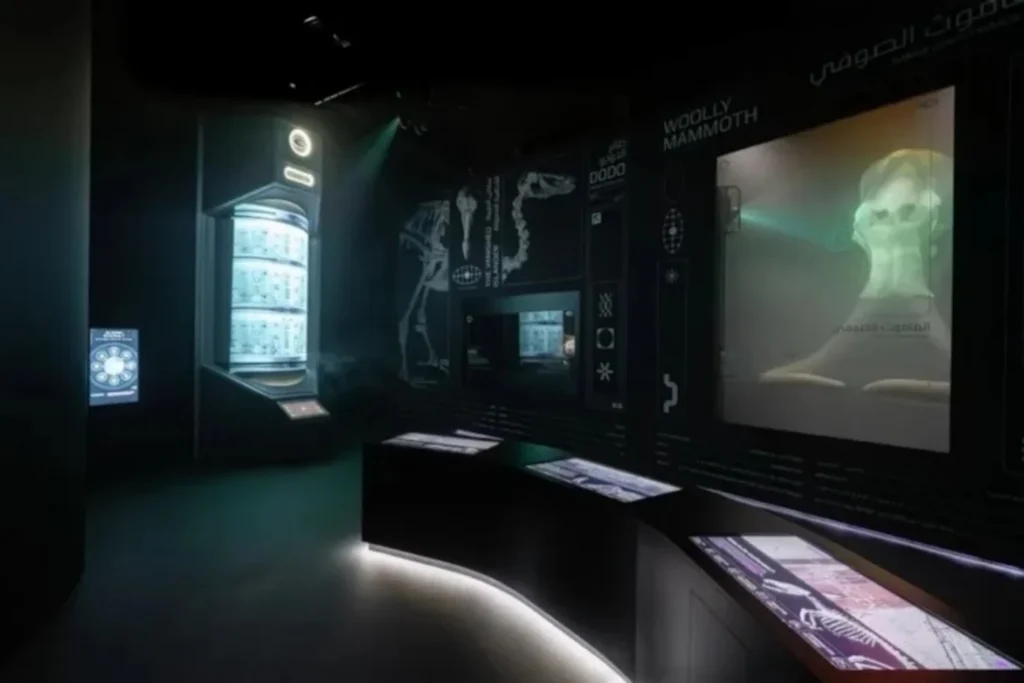
Colossal Biosciences first announced its plan for ten global BioVault facilities in February 2026, part of a nine-figure initiative with the United Arab Emirates that included at least $60 million invested in the firm. CEO Ben Lamm has compared the network to “a modern-day Noah’s Ark” and to Norway’s Svalbard Global Seed Vault, the Arctic backup site for the world’s crop diversity. The Fish and Wildlife partnership extends that backup logic from agriculture to wild biodiversity.

“Just as the Svalbard Global Seed Vault was created to preserve the genetic diversity of our food supply, this partnership aims to preserve the genetic diversity of life itself. This partnership is about ensuring that future generations inherit not just records of the natural world, but the opportunity to protect, study, and restore it.”

— Ben Lamm, CEO, Colossal Biosciences

The BioVault stores both cryopreserved DNA, tissues, and reproductive cells and digitized reference genomes, giving researchers physical material and computational data from the same species. Colossal has not yet detailed whether or how it may monetize the archive of cryopreserved germlines, even as it commits to releasing the sequencing data freely. That open question sits alongside the company’s broader commercialization of its genetic technologies through spin-offs such as Breaking, founded in 2024 to engineer plastic-degrading microbes, and Form Bio, founded in 2022 to license genetic analysis software.

For Lamm, the stakes of the work are framed in terms of irreversible loss. The argument for preserving genomes now is that extinction erases information that cannot be reconstructed later.

“Every species is a library of evolutionary innovation millions of years in the making. Once lost, that knowledge disappears forever.”

— Ben Lamm, CEO, Colossal Biosciences

The genomic-backup approach connects directly to Colossal Biosciences’ wider conservation work, which pairs preservation with active de-extinction programs for species including the woolly mammoth and thylacine.

This story is based on original reporting by Matthew Phelan for Gizmodo. Read the full feature on Gizmodo →