Colossal Foundation Expands Genetic Rescue and De-Extinction Programs Across Six Continents

The nonprofit arm of Colossal Biosciences adds $50M to scale biotech-driven conservation—advancing AI wildlife monitoring, an EEHV vaccine for elephants, genetic rescue for amphibians, toxin-resistant quolls, and species reintroduction efforts worldwide.

BY Colossal Biosciences

Colossal Foundation, the nonprofit arm of Dallas-based de-extinction company Colossal Biosciences, has announced a $50 million funding expansion — bringing its total secured funding to $100 million — to advance genetic rescue and conservation programs spanning six continents. The expansion accelerates the Foundation’s support for more than 40 species through global initiatives that deploy genomic engineering, AI-powered monitoring, and advanced biotechnology to address biodiversity loss at a scale traditional conservation methods cannot match alone.

Colossal Foundation’s $50 Million Expansion Doubles Its Conservation Reach

Colossal Foundation doubled its funding within a single 12-month period, a pace that CEO and co-founder Ben Lamm described as a direct response to the scale of the extinction crisis. “In just 12 months, we’ve doubled the Colossal Foundation’s funding, allowing us to massively expand our partners and projects — and deliver immediate impact for conservation,” Lamm said. The Foundation presently supports more than 40 species through several dozen programs, channeling Colossal Biosciences’ genomic engineering capabilities directly into field conservation.

“As our technology advances, our role is clear — move these tools into the hands of those on the front lines of biodiversity loss, and scale conservation innovation fast enough to matter.” — Ben Lamm, CEO, Colossal Biosciences

Why Traditional Conservation Is No Longer Sufficient on Its Own

Global extinction rates now exceed natural background levels by more than 100-fold, a pace that has outstripped the capacity of conventional conservation approaches. Matt James, Executive Director of the Colossal Foundation, acknowledged that traditional conservation “remains essential” while stating plainly that it “is no longer sufficient on its own.” The Foundation’s strategy addresses this gap by deploying biotechnology as a force multiplier — increasing species resilience, restoring lost ecological functions, and preventing extinctions before they occur.

Key Colossal Foundation Programs in 2025

Colossal Foundation’s 2025 Impact Report documented six major program areas advanced during the year. Each targets a distinct conservation challenge through a biotechnology-first approach.

Program Species / Focus Key Milestone
Ghost Wolf Cloning Red Wolf Four ancestral “ghost wolves” cloned carrying up to 72% red wolf ancestry; first complete red wolf reference genome produced
Wolf Communication AI Gray Wolf (Yellowstone) 48 acoustic sensors deployed; 7,000+ verified wolf howling events captured across 200,000+ hours of audio
Elephant mRNA Vaccine Asian Elephant (EEHV) First real-world evidence of vaccine protection; two vaccinated calves at Cincinnati Zoo survived natural EEHV exposure
Disease-Resistant Amphibians ~500 threatened amphibian species $3 million committed to University of Melbourne; nanobody technology from alpaca immune systems to engineer innate immunity
Northern Quoll Toxin Resistance Northern Quoll (Australia) Single genetic change conferring cane toad toxin resistance identified; first iPSC line for the species generated
Species Reintroduction Fund Multiple species globally Launched in partnership with Re:wild to support global rewilding with catalytic financing and technical collaboration

Cloning Ghost Wolves to Restore Red Wolf Genetics

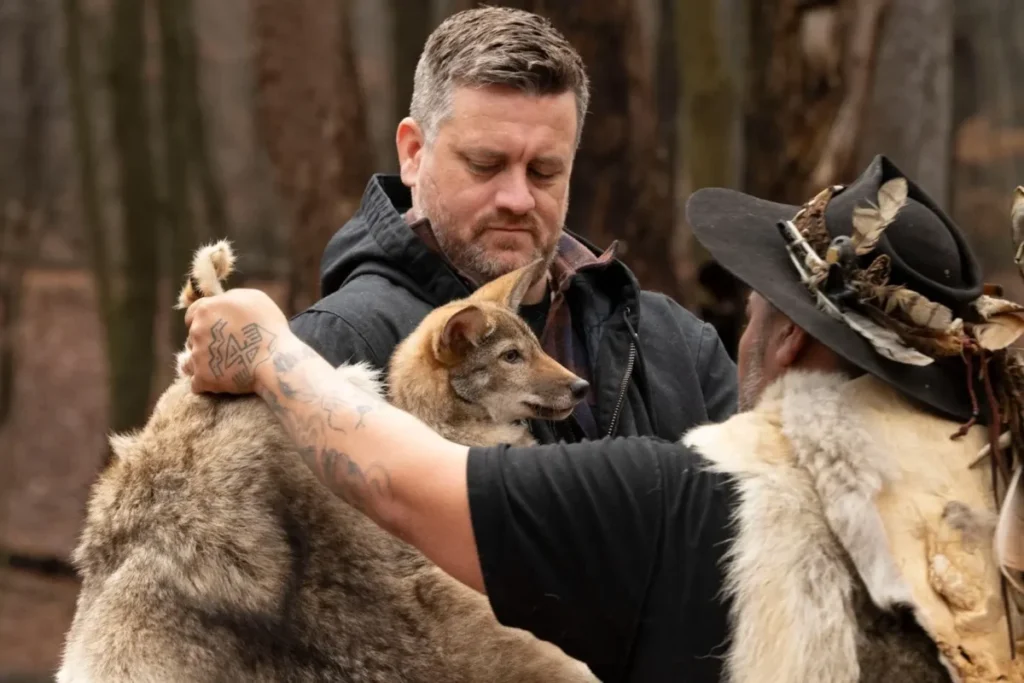
Colossal Foundation’s red wolf program produced two foundational results in 2025: the successful cloning of four ancestral “ghost wolves” from the American Gulf Coast — individuals carrying up to 72% red wolf ancestry — and the completion of the first red wolf reference genome. The cloned pups were produced from a ghost lineage, a population once considered genetically lost. The first pup, named Neka Kayda (“Ghost Daughter”), was honored at a naming ceremony attended by the Karankawa Tribe of Texas, which selected the name. Together, the cloning work and reference genome establish the genetic baseline required for long-term red wolf restoration.

AI-Powered Acoustic Study Decodes Wolf Communication at Yellowstone

Colossal Foundation’s collaboration with Yellowstone National Park’s Wolf Project has produced the most detailed acoustic study of wild wolves ever conducted, according to Yellowstone Wolf Project scientist Dan Stahler. The program deployed 48 autonomous acoustic sensors across Yellowstone, capturing more than 7,000 verified wolf howling events from more than 200,000 hours of recorded audio. Advanced AI models are now being applied to decode wolf communication patterns — including pack dynamics, territorial signaling, and environmental threat detection — in ways that passive observation alone cannot achieve.

First mRNA Vaccine for Elephant Herpesvirus Shows Real-World Efficacy

Colossal Foundation partnered with Baylor College of Medicine to accelerate development of the first mRNA vaccine targeting elephant endotheliotropic herpesvirus (EEHV), the leading cause of death in juvenile elephants held in human care. In 2025, two vaccinated calves at the Cincinnati Zoo — Sanjay and Kabir — survived natural EEHV exposure without illness, providing the first real-world evidence of vaccine protection. More than ten elephants are currently undergoing vaccination, with concurrent antigen testing to monitor immune response.

Nanobody Technology Targets Chytrid Fungus Threatening 500 Amphibian Species

Chytrid fungus has driven nearly 100 amphibian species to extinction and currently threatens close to 500 additional species — one of the most severe disease-driven extinction events in recorded vertebrate history. Colossal Foundation has committed $3 million to a genetic rescue effort with the University of Melbourne that will use nanobody technology derived from alpaca immune systems to engineer innate chytrid resistance into at-risk amphibian populations. The program will also develop a novel amphibian cell line and establish delivery systems to support nanobody-based resistance at scale.

Northern Quoll Program Identifies Genetic Key to Cane Toad Resistance

Australia’s northern quoll populations have faced severe decline from invasive cane toads, whose venom is lethal to the species. Colossal Foundation researchers identified a single genetic change that confers resistance to cane toad toxin — a precise target for engineering toxin-resistant quolls. The team also generated the first induced pluripotent stem cell (iPSC) line for the northern quoll, a foundational tool for future genetic engineering and assisted reproduction work. This work connects directly to Colossal’s broader conservation portfolio.

ViaGen Acquisition Adds Cloning Infrastructure to the Foundation’s Toolkit

Colossal Biosciences’ acquisition of ViaGen Pets & Equine — the world’s most advanced commercial animal cloning company — has brought a substantial cloning capability into the Foundation’s conservation work. Prior to joining Colossal, ViaGen had successfully cloned 15 species at a success rate approaching 80% and contributed to biobanking efforts covering more than 40 species, including rhinos, bats, and critically endangered rodents. “No other company comes close to what ViaGen has achieved,” Lamm said.

Frequently Asked Questions About Colossal Foundation

What is Colossal Foundation?
Colossal Foundation is the nonprofit arm of Colossal Biosciences, the Dallas-based de-extinction and conservation biotech company. It channels Colossal’s genomic engineering and biotechnology capabilities into wildlife conservation programs, currently supporting more than 40 species across six continents.
How much funding has Colossal Foundation secured?
As of 2025, Colossal Foundation has secured $100 million in total funding, including a $50 million expansion announced in late 2025 that doubled its funding within a single 12-month period.
What species does Colossal Foundation work to protect?
Colossal Foundation’s active programs cover red wolves, gray wolves, Asian elephants, northern quolls, threatened amphibian species, and additional species supported through the Species Reintroduction Fund in partnership with Re:wild.
How does Colossal Foundation use biotechnology for conservation?
The Foundation applies genomic engineering, AI-powered acoustic monitoring, mRNA vaccine development, nanobody-based disease resistance engineering, induced pluripotent stem cell technology, and commercial-scale animal cloning (through ViaGen) to conservation challenges that cannot be addressed by traditional methods alone.

This story is based on original reporting by Micah Hanks for The Debrief. Read the full feature on The Debrief →