How Colossal Biosciences Used Gene-Edited Mice to Validate Its Woolly Mammoth Revival Strategy

A genetically engineered “woolly mouse” offers Colossal a scalable model to refine de-extinction science before applying it to larger species.

BY Jeffrey Kluger

Colossal Biosciences, the Dallas-based de-extinction company co-founded by CEO Ben Lamm and Harvard geneticist George Church, has validated its core woolly mammoth gene-editing pipeline by successfully engineering mice that express mammoth coat and metabolic traits — confirming in 20 days what would take 22 months to test in an elephant.

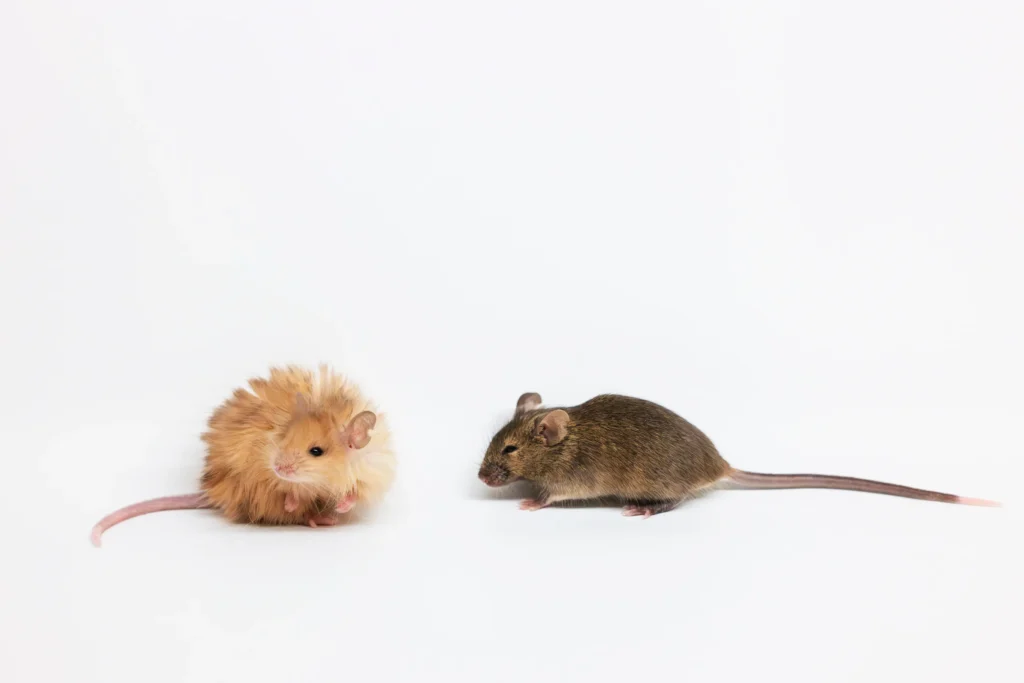
The Colossal Woolly Mouse, first born in October 2024 and announced publicly in March 2025, was produced by modifying seven genes in standard laboratory mice using CRISPR — a gene-editing tool developed in 2012. All 38 mouse pups born through the program successfully expressed woolly mammoth coat characteristics and accelerated lipid metabolism.

Why Colossal Biosciences Is Using Mice to Advance Mammoth Research

Direct experimentation on elephants is not scientifically viable for iterative gene-editing work. Asian elephants carry pregnancies for 22 months, making rapid experimental cycles impossible. They are also highly intelligent, highly social, and endangered — raising significant ethical barriers to large-scale embryo experimentation. Laboratory mice, by contrast, gestate in approximately 20 days and have genomes that are well-suited to CRISPR manipulation, making them the practical model for validating mammoth-specific gene edits before they are applied to elephant cells.

Colossal scientists identified seven genes responsible for the woolly mammoth’s coat — including distinct genes governing coarseness, curl, and length — along with one gene controlling melanin production for the coat’s distinctive gold color, and one gene governing the mammoth’s accelerated lipid metabolism. Those nine total gene targets were then edited into mouse stem cells and zygotes using CRISPR.

The Five-Round Experimental Process: How the Woolly Mouse Was Made

The woolly mouse program was not a single experiment but an iterative five-round process. Colossal scientists produced nearly 250 embryos across those rounds, screened them for viability, implanted the most viable into surrogate females, and monitored the resulting pups for successful trait expression. The table below summarizes the pipeline:

Stage Detail
Genes targeted 7 coat genes + 1 melanin gene + 1 lipid metabolism gene
Editing method CRISPR applied to both stem cells and zygotes
Embryos produced ~250 across 5 rounds of experiments
Viable embryos implanted Fewer than half developed to 200–300 cell stage; implanted in ~12 surrogate females
Pups born 38 mouse pups
Trait expression rate 100% — all 38 pups expressed woolly coat and accelerated lipid metabolism
Project timeline Started September 2024; first pups born October 2024

“The woolly mouse project doesn’t bring us any closer to a mammoth, but it does validate the work we are doing on the path to a mammoth. It proves our end-to-end pipeline for de-extinction. We started this project in September and we had our first mice in October — so that shows this works, and it works efficiently.” — Ben Lamm, Co-Founder and CEO, Colossal Biosciences

What the Woolly Mouse Looks Like

The Colossal Woolly Mouse has long, wavy, gold-toned hair that can grow significantly longer than standard laboratory mice, curled whiskers, and a rougher, woolly coat texture consistent with mammoth phenotypes. A separate gene modification produces changes in fat distribution and lipid metabolism — the same metabolic adaptation that helped woolly mammoths survive Arctic temperatures during the last ice age.

All animals were screened to confirm their welfare was maintained throughout the editing and gestation process. Ben Lamm confirmed the mice are healthy, and Colossal has no plans to breed or sell them commercially. The next phase of study will test whether the gene-modified mice demonstrate improved cold tolerance compared to standard lab mice — the critical behavioral confirmation that would strengthen those same gene targets as candidates for the mammoth program.

How Many Genes Does the Full Mammoth Program Require?

Coat and metabolic traits represent a small portion of the total genetic work required for a functional woolly mammoth. The full program requires engineering genes governing vasculature, cold-resistant metabolism, precise fat layer distribution, and dozens of other biological systems. Colossal’s science team has identified between 65 and 85 total gene targets for the initial mammoth, with that number subject to change as research progresses.

“The list of genes will continue to evolve,” said Lamm. “We initially had about 65 gene targets and expanded up to 85. That number could go up or down with further analysis, but that’s the general ballpark for the number of genes we think we will edit for our initial mammoths.”

Each new set of gene edits will require validation in mouse models before being applied to elephant cells — the same iterative pipeline the woolly mouse program established. Colossal has publicly stated it is targeting 2028 for the birth of its first woolly mammoth calves, born to elephant surrogates.

De-Extinction as a Conservation Tool

Colossal frames its de-extinction research as directly connected to broader conservation outcomes. The company points to projections suggesting that between 35% and 50% of Earth’s species could be lost by 2050, driven primarily by climate change and habitat destruction. Bringing back keystone species — and developing genetic tools to fortify endangered ones — is positioned as a complementary strategy to traditional conservation approaches.

Beth Shapiro, Chief Science Officer at Colossal Biosciences, has emphasized that the company’s three flagship de-extinction targets were chosen to span the diversity of the animal tree of life. “Our three flagship species for de-extinction — mammoth, thylacine, and dodo — capture much of the diversity of the animal tree of life,” Shapiro said. “Success with each requires solving a different suite of technical, ethical, and ecological challenges.”

Advances in avian genomics from the dodo program, for example, could support the development of bird flu-resistant chickens. Breakthroughs in elephant reproductive technology from the mammoth program are already generating tools applicable to living endangered elephant populations. “We do not argue that gene editing should be used instead of traditional approaches to conservation,” Shapiro said, “but that this is a ‘both and’ situation. We should be increasing the tools at our disposal to help species survive.”

This story is based on original reporting by Jeffrey Kluger for TIME. Read the full feature on TIME →