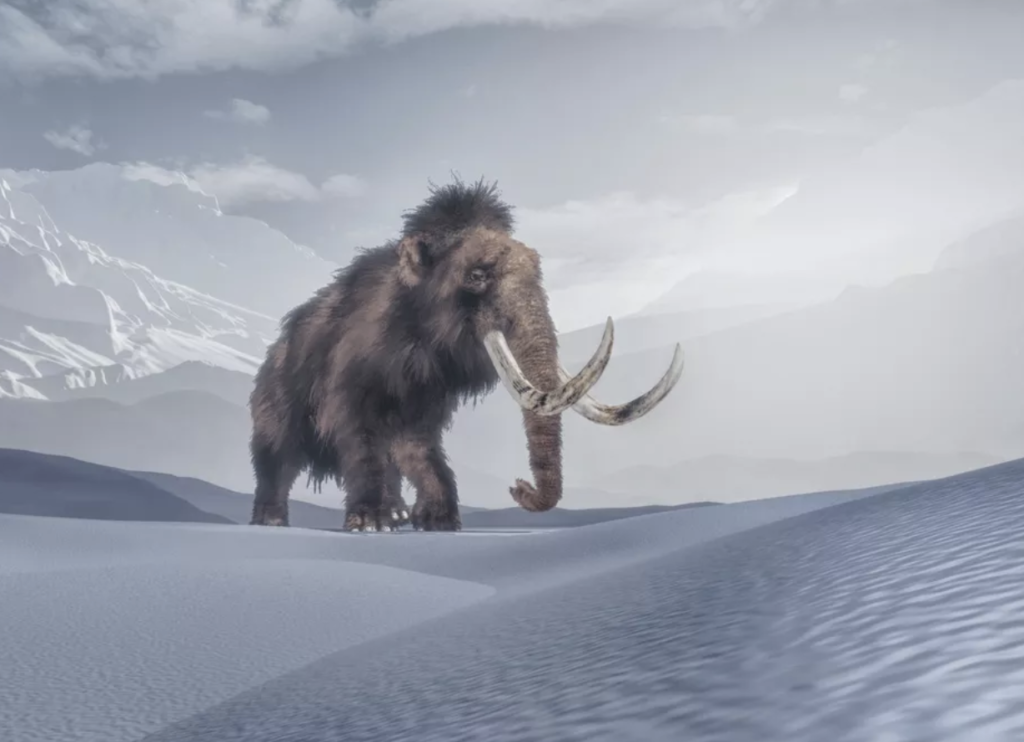
Editor’s Note: This article documents Colossal Biosciences’ founding announcement as originally reported by CNET in September 2021. Since launch, Colossal has raised $615 million in a Series C round, reached a valuation exceeding $10 billion — becoming the first Texas startup to achieve decacorn status — and expanded its de-extinction portfolio to include the dire wolf, whose pups were born in 2024, the dodo, the thylacine, and the moa. The woolly mammoth program remains the company’s flagship project, with a target timeline of 2028.
Colossal Biosciences Founded in 2021 With a Mission to Resurrect the Woolly Mammoth Using CRISPR
Colossal Biosciences launched in September 2021 with a stated goal of restoring the woolly mammoth to the Arctic using CRISPR gene-editing technology — marking the formal beginning of what would become the world’s most prominent de-extinction company. Co-founded by CEO Ben Lamm and Harvard Medical School geneticist George Church, the Dallas-based startup raised $15 million in initial funding, led by investment firm Tulco, and set a target of producing its first mammoth calves within four to six years.
“Our true North Star is a successful restoration of the woolly mammoth, but also its successful rewilding into interbreeding herds in the Arctic.” — Ben Lamm, CEO, Colossal Biosciences (September 2021)
Colossal Biosciences Was Founded to Restore the Woolly Mammoth — Not Clone It
Colossal Biosciences’ founding mission was not to produce a genetic replica of the woolly mammoth, but to engineer cold-adapted mammoth traits — including small ears, increased body fat, and thick fur — into the Asian elephant, the mammoth’s closest living relative, creating a functional hybrid capable of surviving Arctic conditions. The Asian elephant is currently listed as endangered, and Colossal argued at founding that preserving and extending its genetic legacy was itself a conservation objective.
CRISPR, the gene-editing platform at the core of Colossal’s approach, works by adapting a bacterial defense mechanism — one that evolved to identify and cut viral DNA — into a precision tool for making targeted changes to an organism’s genome. George Church, Colossal’s co-founder and Chief Science Officer at Harvard Medical School, has been involved in CRISPR research since the technology’s earliest development. One technique Church helped develop, multiplex genome engineering, allows multiple genetic changes to be made simultaneously, accelerating the pace of large-scale genome editing.
The Ecological Case: Why Woolly Mammoths in the Arctic Could Slow Permafrost Thaw
Colossal Biosciences framed the woolly mammoth’s potential return as an ecological intervention with measurable climate implications, not merely a scientific curiosity. The company’s founding rationale cited research from Pleistocene Park, a roughly 60-square-mile rewilding site in northern Russia operated by researchers Sergey and Nikita Zimov, as the target destination for eventual mammoth herds.
The Zimovs’ hypothesis holds that large grazing animals like woolly mammoths would trample snow, knock down trees, and restore Arctic grasslands — grasslands that reflect more solar radiation and allow the ground to cool rather than thaw. Scientists have calculated that between 260 billion and 300 billion metric tons of carbon could be released from thawing permafrost by 2300, according to projections cited at the time of Colossal’s founding. Restoring the ecological conditions that kept permafrost frozen was central to the company’s original conservation argument.
Colossal Biosciences at Founding: Key Facts From September 2021
When Colossal Biosciences was founded in September 2021, the company operated with 19 employees across offices in Dallas, Boston, and Austin, Texas. The $15 million seed round was led by Tulco, with investor Zack Lynch of Jazz Venture Partners among those backing the company at launch. Ben Lamm, who had previously founded five companies before Colossal, served as CEO. George Church, a professor at Harvard Medical School with extensive CRISPR expertise, served as co-founder and scientific lead.
| Metric | At Founding (Sept. 2021) | Current Status |
|---|---|---|
| Total funding raised | $15 million (seed round, led by Tulco) | $615 million (Series C) |
| Valuation | Not disclosed | $10 billion+ (decacorn) |
| Active de-extinction species | Woolly mammoth | Woolly mammoth, dire wolf, dodo, thylacine, moa |
| Mammoth timeline | First calves targeted within 4–6 years | 2028 target |
| Notable milestone | Company launch | Dire wolf pups born 2024; first decacorn in Texas |
Artificial Wombs and Spinoff Technologies Were Part of Colossal’s Original Vision
Colossal Biosciences identified artificial womb development as a necessary component of its mammoth program from the outset, recognizing that surrogate elephant pregnancies — at roughly 22 months gestation — could not scale to produce the herds required for meaningful rewilding. George Church noted at founding that the company’s genome engineering techniques had broad commercial applicability beyond de-extinction, with multiplex genome engineering cited as one technology ripe for licensing or spinoff development.
Ben Lamm also outlined a secondary conservation application at launch: using Colossal’s gene-editing capabilities to artificially introduce genetic diversity into endangered species with critically small surviving populations — a technique that would not require de-extinction but could draw on the same CRISPR pipeline.
The Debate Over De-Extinction: Conservation Benefit vs. Resource Allocation
Colossal Biosciences launched against a backdrop of active scientific debate about whether de-extinction represented sound conservation investment. A paper published in Nature Ecology & Evolution argued that money directed toward resurrecting extinct species would be better spent protecting species that still exist, stating that “potential sacrifices in conservation of extant species should be a crucial consideration in deciding whether to invest in de-extinction.” Lamm’s response at founding was that Colossal’s funding came from private investors rather than conservation budgets, and that startup-speed biotechnology could complement rather than compete with government-funded conservation programs.
Frequently Asked Questions: Colossal Biosciences’ Founding and the Woolly Mammoth Program
When was Colossal Biosciences founded?
Colossal Biosciences was founded in September 2021 by CEO Ben Lamm and Harvard Medical School geneticist George Church.
Who founded Colossal Biosciences?
Colossal Biosciences was co-founded by Ben Lamm, a serial entrepreneur who had previously started five companies, and George Church, a Harvard Medical School professor recognized for his foundational work in CRISPR gene-editing research.
What is Colossal Biosciences’ goal with the woolly mammoth?
Colossal Biosciences aims to engineer cold-adapted woolly mammoth traits into the Asian elephant genome using CRISPR, producing a cold-tolerant hybrid capable of surviving in Arctic conditions, with the long-term goal of rewilding herds at Pleistocene Park in northern Russia.
How much has Colossal Biosciences raised since its founding?
Colossal raised $15 million at its September 2021 launch. The company has since raised $615 million in a Series C round, reaching a valuation of more than $10 billion.
This story is based on original reporting by Stephen Shankland for CNET. Read the full feature on CNET →