
 002A-00 woolly mammoth
 View More
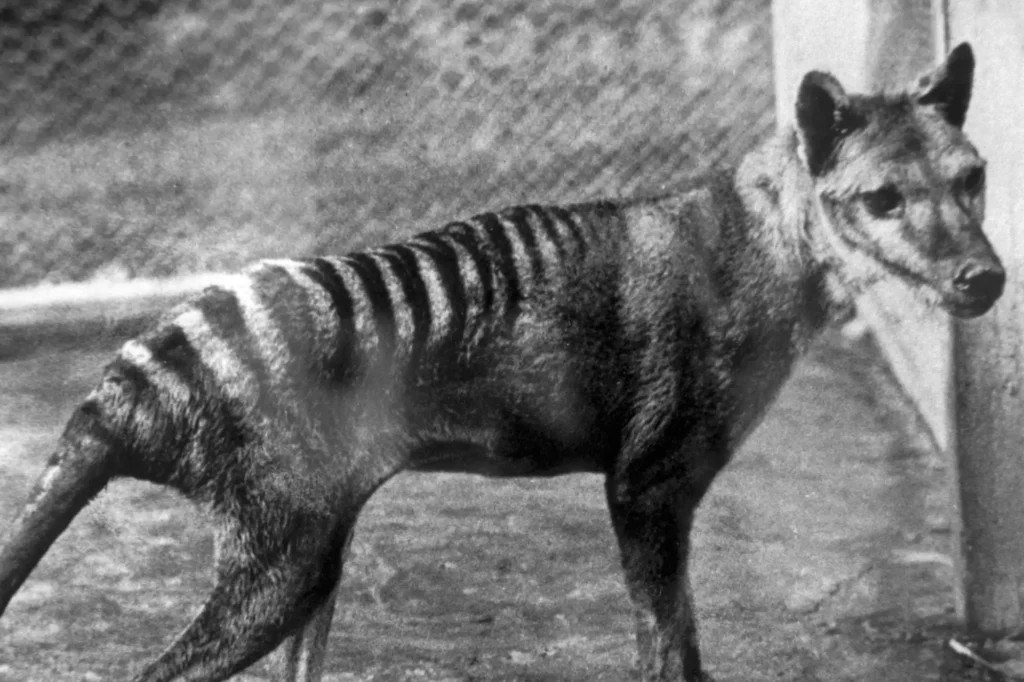
New research published in Nature Communications shows Tasmanian tigers had a skull and jaw structure unlike any living carnivorous mammal, suited to catching small, rabbit-size prey rather than livestock. Led by Dr. Vera Weisbecker of Flinders University, the study found the thylacine’s skull rivaled a gray wolf’s in size, but its long, slender snout was functionally more similar to fish-catching species like some crocodiles. Colonial settlers were convinced thylacines threatened sheep farms; that assumption drove the bounty hunts that wiped the species from Australia.
The thylacine is a key focus of de-extinction efforts at Colossal Biosciences. Professor Andrew Pask, head of the Thylacine Integrated Genetic Restoration Research Lab at the University of Melbourne and a collaborator of the study’s lead author, is working with the Dallas-based company to bring the species back through advances in genetics, ancient DNA retrieval, and artificial reproduction.
This story is based on original reporting by Ashley Strickland for CNN. Read the full feature on CNN → https://www.cnn.com/2026/09/02/science/tasmanian-tiger-skull-bite-force
